
Trevor Matthews: From Technician to Mentor, Building Better Refrigeration Careers
Listen to the specific part
Episode Transcript:
Trevor Matthews: I've talked to so many people my age and they're like, nobody told me that I should have been taking some sales courses or nobody told me I should be taking project management courses. I just kept doing the technical thing. I thought just understanding the technical thing will lead into a service manager role or a director role or this. It doesn't. And this is kind of why I try to open up people and even in the academy or my courses say, you got to start now for 10 years from now. Where do you want to be? That's why I asked where do you want to be in two or three or four years? Because you got to start today to work on that. And that could be reading books, it could be taking courses, it could be getting different coaches or mentors throughout the way.
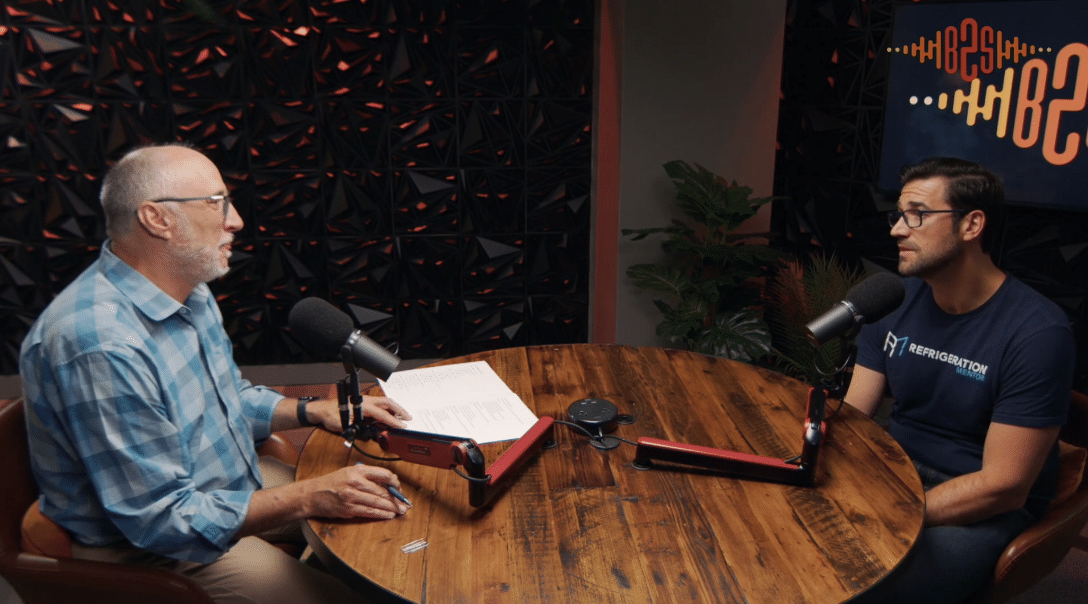
Greg Simpson: Hey gang, Greg here. Another Built to Soud podcast, the pod that's built to build what's next. And today we have a special treat. We've been doing a lot of conversations over the last several months regarding refrigeration and today is no different. We're going to bring back a refrigeration expert. That's really cool. I said that intentionally. He's a super guy and known all over the country as the refrigeration mentor, but want to welcome Trevor in. Welcome in.
Trevor Matthews: Thank you. Thank you for having me.
Greg Simpson: No, this is fun because we often, when we have these conversations, everybody always seems to start in an unorthodox way. They don't always seem to be always out there. I'm sure you probably didn't think you were going to be a refrigeration guy in junior high. It probably wasn't your thing. And so I guess what I'm trying to understand is to understand how do you get to where you get? I mean, I presume you started off being a college guy, right? Wanting to do college.
Trevor Matthews: Yeah. I guess when I started out, there was no trades in my school really. We had, I think woodworking and that was it. And there was like you had to go to college or university. That was the big thing. Guidance counselors, parents. I think my sister, I got a big family. My sister was the first one in my family to go to college. So that was the big thing. You need to go to the college now. And yeah, that's what I did. I followed the path of what everyone told me I needed to do.
Greg Simpson: So did it feel like an opportunity? Did it feel like an expectation? I
Trevor Matthews: Was 16, 17 years old. So to me, it's real young and I look up now trying to make those decisions and it all depends on who you are. But making that decision, okay, well I need to go and spend four years here or even taking a trade a time. I didn't even know what trades were. I knew what carpentry was, electrician was because my dad was a general contractor and my uncle was an electrician, but I didn't really think of it at the time.That's just what they did.
Greg Simpson: Well, so when did you come to that realization, well, this may not be my path?
Trevor Matthews: Well, I did university and then college. So I did those and I took business and finance and marketing and I finished and then I was going to the employment agency to get a job. And then I'd go to the employment agency to get the job and it was like two month job and then I would do it in two or three weeks and they're like, "Well, we don't have any more work for you. You did it too fast." I'm like, "What? I did it too fast." So I had to go back and look for something to do.
Greg Simpson: Okay. So something to do magically became refrigeration?
Trevor Matthews: How was
Greg Simpson: That?
Trevor Matthews: It wasn't that. I wanted to travel. I knew I wanted to travel. So I was looking at being a bartender because I'm like, I can go be bartender anywhere really in the world. And so me and my brother were going into back to, we went to a college to look at the HVAC program, but to register for school. And I met a guy at that college at the time or there and I'm from Cape Breton, so we're really friendly. So I was just asking questions like, "What are you here for?" He's like, "I'm going to take the HVAC program." I'm like, "What's HVAC?" "Well, my dad's a refrigeration technician." I'm like, "Well, what's a refrigeration technician?" And he was like, "You know when you go to the store and you grab milk?" I'm like, "Yeah, I bought groceries before." And he's like, "People need to fix that and repair that." I'm like, "So big deal." You know what I mean? There's something I didn't know. I'm like, "Does he make any money? He's like $50 an hour." I'm like, "What?" And then I signed up for the HVAC program then.
Greg Simpson: So that's really interesting because I've heard that more and more. We've had several people, especially in refrigeration who had a family lineage of doing that, but yet you found that through almost like a mentor relationship.
Trevor Matthews: Just some random kid going to take HVAC school.
Greg Simpson: So at what point did you realize you were in the middle of workforce advocacy? You've come all the way to this point and now you're mentoring people that might be choosing a career in college. Certainly the money has a similar amount. And so that's a bridge. That's quite a bridge to cross.
Trevor Matthews: Yeah. I think probably 10 or more years ago when I was working for the manufacturers working for Copeland at the time and I was seeing more technicians in the field. And even before that, I used to talk to friends and stuff to tell them to get in, even when I was in the field. Because my first year as a technician, I was doing construction and I think I was making maybe $16 an hour or something like that. And I think that year about from March to December, I made like 60 grand. You know what I mean? And this is my first job where I was in the employment agency making $14 an hour. No, I just worked young. This is refrigeration. You do it while you're young. Get it in.
Greg Simpson: So was it different when you started doing it than you though it would be?
Trevor Matthews: Oh, for sure. But at the time I was living in Hawaii and I needed to get a job. So all of a sudden the four years of university and college, I had a 40 or $50,000 student loan. And so my sister sent me a message, a phone call and she's like, "Oh, I just got something in the mail for you. It's a $600 a month student loan bill because I had to borrow all the money to go to school." And I'm like, "$600? I'm making $200 a week." You know what I mean? Or $300 a week? So that's when I had to make a decision. I had to get a job in refrigeration at the time because I finished school first.
Greg Simpson: So you talk about this being, "Hey, I need to make money. I want to travel. I think it's good goals. I think it sounds fun. I didn't travel when I was young. I'm traveling now, but I'm at the end of the career, not the beginning. Probably could do more fun things when I could afford to run and not walk around." But I guess - That's fair. I guess there has to be an opportunity when it goes from making money to be in a profession. And so can you remember that time?
Trevor Matthews: Oh, I think it was almost being... Oh, I was out of the field for sure. I did up until 2014. So I started in 2004, my first schooling. And then the end of 2005, early 2006, I got into my first apprenticeship program. So Red Seal in Canada, you have to do an apprenticeship program. So the beginning of 2006, I got enrolled. In 2009, I finished. So I got my journeyman ticket and I was a journeyman from 2009 in the field to about 2014. That's when I got out of the field. And that's when I really made the decision I need to do something different because I had kids coming and that's kind of when I got out of the field.
Greg Simpson: You've got a level of competency, but that's a far cry from the refrigeration mentor shirt you're wearing today. So there must have been, at some point, you were talking to other people and people were leaning on you for advice. Can you remember when that part started really in earnest and people were really depending on you?
Trevor Matthews: I think even when I was in the field, I used to run jobs, so I had younger apprentices come up and I'd guide them from what I knew. But honestly, I didn't know a lot. When I look back now, I was just winging a lot of it because we didn't have a lot of people to be able to train and teach us and educate us how to do things right. We learned from the other guys who learned from the other guys who did a lot of the stuff right and got it to work, but it wasn't exactly right. And sometimes we did a lot of stuff and why. So I would teach as much as I knew and I could teach. And I always did that, give as much information as possible where there was lots of guys I've met that didn't want to share their knowledge because it was job security. But I would share everything that I knew because I knew if I shared with them, they could actually go out and do the work, then I may not have to go to that call. But I think when I was doing technical support at Copeland, when I was talking to thousands of technicians and training thousands of people, that's where I was like, I really need to help these guys because I seen me in a lot of them. I seen me when I was three or four or five years in the industry struggling and I'm like, how do I help them?
Greg Simpson: So you talked about getting stuff almost right. I have a storied first 10 years of my career where I got stuff almost right. You know what I mean? But can you remember a mistake that you might've made that kind of permanently mine was like getting out in front of myself and stepping into things I probably shouldn't have and going too fast. And I guess for me it was self-importance that I was the architect, right? So it was a self-importance kind of thing that came in, but can you remember something that maybe kind of impacted you?
Trevor Matthews: Countless things. I made lots of mistakes. That's why I'm here. You make mistakes, you learn from them and you grow from them. I think there's lots of times where... There was one time in Australia when I ordered a piece of equipment because they do it in kilowatts there capacity and we do a BTUs here. So I ordered it through the power. So I looked at the input, it said the kilowatts, so I ordered it, but it was half the capacity it need to. So it cost the company thousands of dollars and the guy there to do the lift. So I never forgot that.
Greg Simpson: Did you feel the consequences of that or did the company?
Trevor Matthews: The company did.
Greg Simpson: They accepted you because they knew how hard you were working.
Trevor Matthews: But I went and I owned it and I told them I made the mistake. They knew anyway, but it's like anything, you don't lie about it. You own your mistakes, right?
Greg Simpson: Yeah. Let's go back to when you were kind of in your first mentor role there. You were talking about being at the help desk, I'll call it, but talk about how many people were out there and what the shape of that thing looked like.
Trevor Matthews: Yeah. Well, when I first started, I met a guy that was working there, Andre Pat at Copeland, and he was standing up in front of the, I think it was Emerson or we were Emerson at the time, but he was standing up in front of about 50 people or whatever and he was talking and he was talking about refrigeration and I'm just like, I don't know any of this stuff. And it's like I should know this stuff. And it's like, that's kind of what I want to do. And so because in my first couple of weeks I was up in front of people talking and that's something that I was always... I'm good chatting with people just like this. I was always good at having a conversation with people being from Gay Breton. The thing is getting up in front of a crowd of 50 people, that was something I'd never done before. And he was just doing it so easily. And so what I did is like, okay, how do I get to that level?
Greg Simpson: So how did you close that gap? Because that was hard for me to do even when I got into this role. It was hard to close that gap of one, being able to organize your thoughts, but being able to... It feels like there was a gap of knowledge too.
Trevor Matthews: Oh, definitely. I was putting the reps in. That's it. I put the reps in. So I would look at the material, I would go into their information bank, I would study everything. I would call people all around the world. I had access to all these gurus and everyone had the opportunity when I was at Emerson at the time to do the same thing, but I just plugged away. I would stay late. I would work. I would look at all these presentations. I would stand up in front of my family, do the presentations. I would practice, practice, practice. And then that's just how I got better. It's no different than being a refrigeration technician, being an architect. It's just putting the reps in and are you willing to put that time in?
Greg Simpson: That's interesting because a young architect starts by doing tasks, right? Do this, then you do that. Hey, go do this. Hey, go do that. But at what point do you feel like in your career you went from doing a task to really get into a place where you're diagnosing an entire system, really going in and seeing it, kind of like seeing the matrix?
Trevor Matthews: Yeah. I think when I started that first role after being a technician as was with Copeland and Emerson, I was business development. So I'd go around and I would teach the technician, then the contractor how to sell their stuff. That was my role. So I would go in and talk about electronic valves, compressors, controllers, and that was my job. I got to a point where I was seeing these guys learn and they were getting better and light right up. So I went in and I said, "I need to be more of a training role versus just a business development role." So I talked with my boss about that and then that's what we did. He was like, "Yeah, let's do it and try it out." And that's really when the training and development side of me started.
Greg Simpson: So effectively you invented your own job?
Trevor Matthews: Yeah, I guess so. Well, me and my boss did, I guess I would say, but he thought it was a good idea because it was like that's where we were getting the most out of it was me being in front of contractors, me being in front of technicians and it was working.
Greg Simpson: So you're now an entrepreneur, but you're also an expert technician. And so obviously it was that technician/sales/entrepreneur that brought you to Refrigeration Mentor, but I still get the feeling that there had to be somebody to help you jump over that crevice to get you to a place where, "Hey, I can be more than just, I can help people." I mean, that's just really... I can't tell you how cool that part is. That's one of the coolest things I like about you is you have such an altruistic view of things and that, hey, making people better, but you've gone from going to college to making money, to paying off student loans, to being kind of good, to invent your own job, to invent your own business. I mean, was there somebody out there that just said, "Hey, you can do this."
Trevor Matthews: Yeah. There's one person. Oh, that was my wife. Yeah, for sure. I went to start a business back in 2009 was the first time I talked about owning a service business and it took till 2021 to start Refrigeration Mentor. Even though it wasn't a service business, it was still... I think this worked out in a way better way for me because I'm helping a lot of people reach their goals in their careers and lives. So that's so awesome. But back in 2020, during the pandemic, I started really... Maybe 2019 is when I really started thinking about it. How do I get to that next level? And that's when I really started investing in personal development, 2019. And this is starting to read books where I didn't read really before. Technical manuals, thousands of them, but I wasn't reading personal development books. And that's where I started really investing in that side of my life. And over the years, getting in different business mentors and coaches where I didn't believe in coaches before that, but I started paying coaches and paying people to teach me the stuff. I kept talking to my wife about it and I came to the end of 2020, the beginning of 2021 is when we made the decision, okay, we're going to take a chance on this together. I think it was July of 2021, my boss came to... I was asking for stuff for four years or three years, like money things. I wanted to lead a team. I wanted people underneath me. And he sat me down. I remember we were at a restaurant and he was like... His name's John Rabido. Shout out to John. We sat down and he's like, "Trevor, I finally did it. We're up closer to the wage," because I took almost a 40% pay cut when I went there. "We got you closer to wage. We got four people under your team. You're going to be the director of this department. "And then that's when I had to tell him no, I'm going to be resigning.
Greg Simpson: That's always a painful thing for a boss. I'm sure John appreciated your path.
Trevor Matthews: Yeah, he was
Greg Simpson: Excited. So back to your mentor, man, when your mentor is your spouse, man, that's pretty incredible. I mean, what do you think she noticed about the situation maybe that even you weren't prepared to notice?
Trevor Matthews: I think she just had my back. She noticed that I was willing to put the work in, even though it was hard both on us, our relationship, hard on the family, hard on... Because it's not easy being an entrepreneur and she just had my back the whole time and still does, which is amazing. She's the COO of the company and she really helps on the back end, so huge. We wouldn't be where we're at today without her.
Greg Simpson: So she notices this in you, but you had to demonstrate, you had to make a response when you guys pulled the family into this. How did you make the response of this is serious and I'm going to demonstrate this? Because I think that's what young people, that's the divide they don't have today. Sometimes it's available to you, but you have to get it. But when you're in Hawaii and you're paying off student loans, that's one level of commitment. When you got a family, that's a whole different level of commitment. So you have to demonstrate something back to that family unit.
Trevor Matthews: What
Greg Simpson: Was that?
Trevor Matthews: I think she had more belief in me than I did. This is the thing, the limiting beliefs. I remember even when we were talking about, oh, maybe I should partner up with this person or get this person involved or how do I talk to this person instead of me just doing it? I think she had the belief that I could do this and then I just... Because there's so many things. Even now, it's just that next level. You get to a constraint and until you get over that constraint, then there's another constraint, and then you get to that one and it's another one. So it doesn't stop. It doesn't matter if you're starting out or if you've been doing this for 30 years and you have a successful business running, there's always that next constraint. And I think it's just she had the belief in me that I could do this and I just kept going.
Greg Simpson: Okay. My spouse tells me all the things, things I don't want to hear about certain things. Was there those moments that she just looked at you and said, "This has got to be the way we go about this?" I mean, was there things that...
Trevor Matthews: Oh, there's also... Well,
Greg Simpson: We can stay out of the personal life, but let's stay down the fairway here. Yeah, no,
Trevor Matthews: But it's tough building a business with your spouse. It's tough.
Greg Simpson: I can imagine that would be... It'd be the commitment is hard. The failures are joint. So it's not like you had a bad day at work. We had a bad day at work. So it's those things I think that are real challenging. And so I just think that makes your journey even the more special.
Trevor Matthews: Yeah. It's a lot of work and probably more work on her part. I'm here hanging out with you on a podcast, you know what I mean? Down in Florida before FMI. Great. She still has three kids to be looking after and still working on top of that, running a business.
Greg Simpson: So I guess you should be accelerating this thing really fast for the sake of the family and the kids and really the sake of your position in industry. So did you have things that were going on in those early days that allowed you to maybe accelerate faster than you might've though you could?
Trevor Matthews: Do you mean what part? In Refrigeration Mentor?
Greg Simpson: Refrigeration Mentor, the beginning of the business.
Trevor Matthews: Well, the beginning of the business was like, well, how do I do this? I seen there was an opportunity. When we sat down, me and my wife and talked, we were looking at CO2 refrigeration. I knew CO2 was going to grow here massively. I've been training it since 2015, 2016, and I knew it was going to grow. I was training it already for years and I could see the onslaught of this equipment coming in with regulations happening. And that's really where Refrigeration Mentor started, because I was going to start just a CO2 training business at first. But then I looked at it, it's like, but it's not the only people that I want to help, and it's not just a CO2 journey. It's a career journey. What's that path? It's not only that, that's just a part of a technician's journey. In the beginning, it was trying to figure out how do I price? Who am I going to talk to? Who's the contractors, the technicians that I could even seek out? I was on the phone calling people, going to events that I had really no business to be in at. The first event I did start at Refrigeration Mentor, we did one in Canada was a CMPX show, and then the second one was with Chilventa in Germany. Didn't have no money in the business. We didn't have any money at the time. I'm like, "This is the biggest refrigeration event in the world. This is the opportunity." And that's kind of where it started to kick the career off. And it's actually next week, so I'll be out in Germany next week again.
Greg Simpson: Oh, so the three kids are going to have a single parent next week too? Yeah.
Trevor Matthews: They usually come with us too when we go.
Greg Simpson: She'd go to Germany with you?
Trevor Matthews: Yeah. Oh,
Greg Simpson: That's fantastic.
Trevor Matthews: This year, I try to bring the kids at most of the events that I go to, big events if we're traveling around the world. That's the whole reason why I go to business is so we can do stuff like that.
Greg Simpson: So let's talk a little bit about Refrigeration Mentor for those who don't really understand the shape of the business. Yeah. Talk about, obviously, it has an early shape and it's continuing to grow, but talk about just the business.
Trevor Matthews: Yeah. When me and Julia started, it was about a journey that we wanted to put technicians through. Really, me, when I was five years into the industry, I seen how I struggled, my friends struggled, you know what I mean? With confidence, second guessing ourselves, not being able to solve problems that we were like, "Man, we're journeymen. We should be able to solve these problems." And so the journey was I had a compressor masterclass, a supermarket course, and then a CO2 course, so that was it. But what I wanted was technicians taking that order, you know what I mean? Because that is... Everybody knows compressors. I used to think I know compressors till I worked for manufacturing. I knew nothing. I knew very little and then started learning about all the other manufacturers. And so what we started doing was lots of courses, but then we started to get contracts with contractors. There's one out of Western Canada Gateway Mechanical. They put almost all their technicians, hundreds and hundreds of technicians through different courses over the last four or five years. But then, so we started building private programs and then technician based programs where four weeks, six week, and eight week programs, which was amazing. We've helped so many thousands of technicians all around the world from design courses to these courses. But Refrigeration Mentor has evolved since then because I really want to help people's journey in refrigeration because a course is great, but after the course, what happens? They're out at a call and they don't know how to fix it or they don't have anyone to call. Where do you turn at that point? And so this is where the evolution of the Refrigeration Mentor Academy come in.
Greg Simpson: Cool. We'll get to that, but it's in the title mentor. And so the whole business is around becoming a mentor. It's not just three courses. I mean, those initial three courses. So somewhere along the line, you needed to become a psychologist. Honestly, if you stop and think about it, talk about how you meet the young person where they are to become a trusted advisor and a mentor for them.
Trevor Matthews: Yeah. I think social media definitely helped out with that. I've been making videos, man, since 2019 at least. I took a course, one of my first... I was skeptical, you know what I mean? Online, you see this thing, you pay $50 and it's $500 and it's $6,000. But then I took this one course and I actually just sat my phone down. The 90 days I had to do this by my coach, 90 days and a three-minute video and post it online. I did that every day. You do videos now. It's like, what do I say? How'd I do it? The first one was terrible and then you record, re-record, re-record. I've done that so many times. Then I was getting to the point where it was just bam, I was hitting them every time. Then I just started making technical videos and people started to engage and say, "This helped me. This helped me here. Can you help me with this?" Then that's where I just started to really evolve into videos that
Greg Simpson: Time. Basically, the video started as a social journey to help move your early courses, but at some point this merged into a, "Hey, we've got a whole business of being able to get people from here to here." And that's really a different place, I think, than the initial, maybe even the initial charter of your business.
Trevor Matthews: Well, I started to do the videos even more. Sorry, Greg. Just even before Refrigeration Mentor, I started those videos just to help. I was just doing the videos, hundreds and hundreds of videos just to help people because I knew they struggled out there with refrigeration. Wow.
Greg Simpson: I
Trevor Matthews: Had nothing to even do with the business when I started to do the videos. And even now, I still put thousands of videos out a year and it's good
Greg Simpson: To help. You've got quite a capture of videos and quite a following of people in industry who do that. But being a mentor is about coaching somebody to get someplace. Obviously, you went through that coaching and from that coaching, you developed your own coaching style. So take us through maybe an individual that comes to you that you can start to walk them through how you would help them through your course. Maybe not through the academy yet, but just through the course of mentoring as you had in the beginning of your business.
Trevor Matthews: Yeah. So the biggest thing was finding out where they're... I always like to get to know where they're at because at the end of the day, it has nothing to do with me. It has nothing to do with me. It's like where do they really want to be in their career or their life? I have lots of people, just so many success stories, but a lot of the times it's like I find out where they're at. Where do you want to be in a year or two years? How much money do you want to be making? Where do you want to be living? What do you want to be working on? And why? Ask them the why, you know what I mean? Why do you want to make $10 more an hour? What's the reason? Is it just to go and spend money or is it to buy a house? You know what I mean? To me, at the end of the day, it doesn't matter. So I find out what they're looking for, and then I try to work around how to help them and personalize their experience with a refrigeration mentor, and that's really what I still try to do.
Greg Simpson: Yeah. You told me early on, you said you can't change people, but you can help light a fire under someone who's ready. How do you recognize when... I don't know how to do this exactly. How do you recognize when someone's ready?
Trevor Matthews: When they're coachable. Yeah, when they're coachable. You ask them, they tell you what they want and they need and you explain how to get there and they just start doing it. A lot of people think they want it now, right? All of it like, "Can I have this now, now, now?" But a lot of times it takes time to get what you want. It's not an instant gratification where you can just jump on social media and blow two or three hours down the rabbit hole. And when I see someone coachable that's willing to put the work in, I know that they can reach their goals. I ask them, "Do you have goals set?" And if they say no, they don't have the right coach or mentor yet. And that's where when they say, "Okay, these are my goals and when did you start working for? I'm starting to work for them right now," then you know that person's ready.
Greg Simpson: Well, goals are great, but what's Michael? Gerber? The boxer? Tyson. Mike Tyson. Everybody's got a plan until you get hit in the mouth. Yeah. I mean, how do you get people to respond the right way when things become uncomfortable? Is that something they have to bring? Can you help that along?
Trevor Matthews: Yeah. You only can help them so much. They got to do all the work. I tell everyone coming to courses, I can't do the work for you. It's the people that put the work in. I can make it easier. I can fast track. I've seen lots of people get 10 years of experience in a year. You know what I mean? That's a
Greg Simpson: Good spot. That's a good
Trevor Matthews: Spot. Or five years. It depends who you are, and it depends on whose 10 years experience you're talking about. Is it 10 years of one year? So they really only have one year, but they've been doing it for 10 years.
Greg Simpson: Yeah. We have a conversation around here. We don't have five years to create a five-year architect. So you were talking about maybe someone who's really good at this can take an 18 month journey and cut it by a third. How do you try to put that in front of them that it's their pace? Because that's the difference in, say, college or some kind of finite program is you're talking about almost a self-pacing ability of the really energized Just employee.
Trevor Matthews: Yeah. I think it's a lot of them see what I do. I put the work in every day, seven days a week, and they're like, "You don't stop, Trevor. I just see it consistently keep going." I'm like, "If you want to reach your goals, this is what you got to do." And sometimes it's days and it's nights and it's weekends and it's continue to work towards that and being curious. I always tell, you got to be curious about what you're doing and where you're going and why you're going there. So think about that. Stop and think.
Greg Simpson: So basically we were taught in school not to be able to put together drawings of any kind. In fact, that's why the profession, the young person in architecture has no ability to do work. And it absolutely influences their value to a negative extent. There's no question about that. But what you can get from the process is the ability to think critically. And I apply things I learned in college for critical thinking 35, 40 years later. Awesome. And so basically, how do you unlock that critical thinking ability of a person who thinks they're just being a technician?
Trevor Matthews: Yeah, that's a good one. And once again, it comes back to where they want to be. I think myself personally, especially a supermarket technician, I think this is, and people disagree with me all the time, but this is young man's game for 10 to 15 years. So what does that really mean? Supermarket refrigeration's not easy. You're lifting hundreds of pounds of compressors, you're moving pipe, you're driving, you're on the roof and it's 150 degrees, you're in a freezer, it's minus 40. So it's up and down ladders, driving for eight hours a day. So it's a lot. For me, I try to find out what journey they want to be on. If they want to be a technician their whole career, I'm behind them 100% of the way, but I like to show them other paths. Here's the options. Which path do you want to take and how long do you want to put the work in to get there? Because there's lots of people that just don't know that there's more paths. This is what I've been doing and there's no one around me to give me advice on what's the next step or what could be the next step. And I just show them the different options or paths that they could take in their career.
Greg Simpson: What's the path for someone who's spent that 10, 15, 20 years in the spot? Do they have a next place to go? I mean, do you all ever talk about after your playing career is done?
Trevor Matthews: That's one of the things that most people don't. I've talked to so many people my age and they're like, "I just did this. Nobody told me that I should have been taking some sales courses or nobody told me I should be taking project management courses. I just kept doing the technical thing. I thought just understanding a technical thing will lead into a service manager role or a director role or this." It doesn't. And this is kind of why I try to open up people and even in the academy or my courses say, "You got to start now for 10 years from now. Where do you want to be? That's why I asked where do you want to be in two or three or four years? Because you got to start today to work on that." And that could be reading books, it could be taking courses, it could be getting different coaches or mentors throughout the way.
Greg Simpson: So see if we can complete this sentence. Training gives you information, but development gives you what?
Trevor Matthews: What you want.
Greg Simpson: What you want. Who taught you that?
Trevor Matthews: That's a good question. I think looking at my past self on just pushing myself. Yeah, lots of different maybe mentors, mentors of mine that don't know they're even mentors of mine. I listen to a lot of podcasts. I listen to a lot of, like I said before, personal development, reading books of people that really push me real hard.
Greg Simpson: That's pretty profound. I mean, kind of like if you can develop as a person, you can set yourself free to do whatever you want or whoever you want to be. Let's break over and talk about the academy a little bit. It's kind of a newer kind of part of your business and help us try to understand one, who the candidate is, but two, what it is first.
Trevor Matthews: Yeah. So an academy is like a technician journey to get the results that they're looking for. So where we had courses before, like I said, courses are great, but what happens after a course? This is really a technician journey to find, get them to where they want to be in their career. Like I said before, I started this because I seen me at five or six years as a technician in the industry, didn't know about to get in sales, I didn't know about project management, business development, service manager roles, all these things that fell into my lap that a lot of people are looking for. And so what the academy's all about is about one place where you can go and develop yourself either technically as well as personally. I'm really heavily involved in personal development and technical development for people's careers. And so that's what the academy's out is seeing where a technician's at today and where they want to be tomorrow. And that's what we try to help with.
Greg Simpson: So what's different about maybe the person that might have been a candidate to come and take a course or two versus the person who's really ready for the rigor, I presume that the academy presents?
Trevor Matthews: Yeah. So it's an all in one. So we don't have courses anymore. So if you become part of the refrigeration mentor family, you're in. And then that basically is that you get all the courses, but what I do is I help build a path for you. So where do you need to be? Because we have lots of courses, but it's not all the courses that you need. Do you need to be better at CO2 or supermarket refrigeration? Do you want to become a service manager? It all depends. The biggest difference is now we meet up every week, twice a week. So they come in for technical training and technical support twice a week. Where I used to do my courses would be like a four eight week course and then it's done. This is ongoing. It just doesn't stop.This
Greg Simpson: Is a pretty fluid business, refrigeration. CO2 is arguably considered new. It's not. Europeans have been doing it for decade and a half, two decades, but the next thing's often coming. I mean, how do you handle the expectation of being able to present not only a contemporary view of refrigeration, but be maybe able to lean into the future a little bit?
Trevor Matthews: Oh, it's all the people that I connect with. Next week I'll go to Germany to Triventa and I'll learn as much as I can from all the different manufacturers, all the different salespeople and just connect into how do we bring value to each other? And my goal is to help make it easier for technicians in the field or contractors because we have a contractor path for the academy as well to help different groups. But it's my goal is to prepare technicians. Even for example, the AMAC and the regulations for this, I knew about lots of this stuff when the first one, Kagali Amen came through, but contractors and technicians didn't even know, even end users didn't even know. And now with the AIMS Act and all these other regulations, global regulations, it's like how do I help inform them to prepare them because it sucks being the last one to know.
Greg Simpson: Tell me about it. I think that's me on this side of the table if you want to know the truth. So we can't get into very many conversations right now without talking about the influence of this career inside an AI era and what you feel like is likely to happen where the technician is going to interface with these kind of expert systems.
Trevor Matthews: They already are. I've been teaching AI for two years now, how to use it responsibly, how to use it as a technician. I think it's going to be very important as a refrigeration technician. It's kind of like a computer. Refrigeration technicians should have a computer. It is a tool. Same with AI. It's a tool like I tell everyone. It's a tool today. So you should be using it as a tool. And yeah, that's why we do courses on and teach the guys in the academy how to use it responsibly.
Greg Simpson: What kind of things, I'd be interested, what kind of things, how would they interface with it in a typical day?
Trevor Matthews: Oh, you can build skills around it. I don't know if you've ever heard of how to build agents and skills. You can build it to help walk you through. I worked on my first AI project that was called Refrigeration Buddy. So basically that's a mentor in the pocket. But now you don't even need anything like that. You can build your own skills through chat or ChatGPT or Claude. I use all the different ones. You could use Grok, Gemini, but basically I teach them how to use them to help your... Really what AI is to save time. And we're a society that has no time today, especially in refrigeration because it's just nonstop. So I teach some guys how to build skills, some people how to use it resourcefully, responsibly, because I think that's where a big issue is. I had a contractor, a service manager last week in Florida actually. They're from Florida too. And they were like, Trevor, they were looking for a contractor partnership program where they put a bunch of technicians to a private course. But he was like, "I have a bunch of newer technicians that are using AI to troubleshoot their equipment and they're calling me up and they're telling me it's this problem here. It's this component, ChatGPT or whatever one they're using. Gemini is telling me it's this." And the service manager serves that store many times. He knows those components aren't even on that system. You know what I mean? So that person doesn't know how to properly use the AI to their advantage because you got to challenge AI. AI is just going to tell you what you want and try to make you feel good and put you down rabbit hole. So if you train it and develop it, it will have a higher likelihood to reach what you're looking for.
Greg Simpson: Yeah. We could probably have a multi-hour conversation about the pitfalls of probabilistic large language models and how they drive you into trying to fix things that aren't broken. But let's kind of pivot from maybe resource to what you see in industry where the systems themselves might be using those kinds of technologies to optimize its own performance.
Trevor Matthews: Oh, they've been years. It's not new. They've been doing this for years, even before society learned about large language model. But yeah, they're going to evolve and this is going to help the technicians out there more.
Greg Simpson: So talk about what you think you could envision 10 years down the road for calling it up and telling you what's wrong with itself or do you see it going that far or is there some other use case? There's
Trevor Matthews: Already stuff out there similar to that. There is equipment. For example, in the residential side, it's just the same stuff over and over again. So they got a lot more experience versus big CO2 system where it's built up. But you will see, going forward in 10 years, you will have kind of like my refrigeration buddy app that I was working on AI. It's going to be like that. Someone will walk you through the process and this is how you do it. People are like, oh, I heard it all the time. Oh, it's going to make the people dumb or stupid or not know what to do. But you still need to understand what you're doing. It's kind of like driving a car. You still need to know what you're doing if all of a sudden you get in a Tesla and you never drove one or a stick shift.
Greg Simpson: No. I find that AI is, I think you used the right word, the current iteration of AI needs a challenge. You need to be able to understand when it's drifted from something that's logical. It's pretty mind blowing what it can pull out and have a conversation about. And I think the controls probably are the place where AI is really going to shine sometime down the road.
Trevor Matthews: It already is.
Greg Simpson: But I think it's going to get crazier and crazier. But I think from our point of view and our business, what we want is a more deterministic outcome. We want, "Hey, this is the criteria I need to solve. You run this and you tell me you went through this level of acceptance, you went through these acceptance steps. And then I'll trust, I'll have some conversation about trust that you actually went from here to here." We affectionately refer to that around here as the ready done gate. Don't start till you're ready. And then make sure your definition of done can hand off to the next person. So probably a little bit different here than out in the field because I would imagine the people that were working here are not just repair people, but I imagine you're training people who are installers.
Trevor Matthews: Yeah. Really people in supermarket refrigeration or CO2 refrigeration, commercial refrigeration who really want to get better.That's it. Like I said earlier, stop second guessing themselves, stop having to call their service managers or their lead techs, people who want more confidence and really solve tougher problems because I was that technician driving away from site not knowing if I fixed it. It's running, but not sure how I fix it. You just kicked
Greg Simpson: It.
Trevor Matthews: So my goal is to help these guys to understand it. They leave and I fix the problem. If I get a call back, it's like it's something else.
Greg Simpson: Okay. We had a conversation just before we came on air here about college versus trades and not specifically your journey, but just college versus trades and being able to get at the young person early enough to know that this particular career is available to them. And I ask you a question, you asked me a question and the question said, how would you do it in industry? And we're not doing it well. Workforce advocacy is something that we believe in. Welders are leaving the business, electricians are leaving the business, other skilled artisans are leaving the business and we're not getting to them early enough. So you've got this wonderful platform. I mean, how would you envision getting to these folks?
Trevor Matthews: It's like anything. It's in the schools at a young age, more public social media about refrigeration. You don't go to a hockey game and you see a lot of promoting refrigeration. And if it's being promoted, people don't know what it is. If you go and you see a retailer name, people know what the retailer is because they go shop there. But for refrigeration, it's behind the closed doors. They see the display case and they see the food in there. They know the food over to display case. So we're not connecting the dots for them. So they could see a name of the biggest manufacturer in refrigeration they wouldn't really understand. So we're not connecting the dots for them and that's what industry needs to do a bit more. People got to put money behind it. Government need to put money behind trade. Like Mike Rhode, been doing it for 30, 40 years. You know what I mean? And he says it's the best. The government's going to put money behind it.
Greg Simpson: It doesn't seem to be as high on the priority list as some other more politically expedient kinds of things. And it's true. There's healthcare. And that's what's unfortunate. It's what's unfortunate. There's only so much maybe government can do, but I think we're trying to understand as a person inside an architecture, engineering and real estate trade organization, how do we... It's hard for us to get into high schools and intersect a student's choice before they've made maybe another choice. I mean, do you see that as a long-term role for what Refrigeration Mentor can do or is it just too far? Is there just too much? Is the ball just too big for you to work with the industry cohort that you have?
Trevor Matthews: That's not my focus. You know what I mean? I've done lots of that. I went to lots of high schools and talked about it, but my focus is not on that at this point, not going into the schools. I will do talks for sure. I'll give back like that, but that's not my... My focus is to help the people on the ground right now and that's my goal is to get these people to where they want to be in their career. Already started in the industry, but I work with other industries that are working on this, on trying to get more people in the industry.
Greg Simpson: So do you find yourself trying to focus in on where someone's career arc is if it's not completely in refrigeration at this point, or are they just intersecting you where you are and saying, "Hey, I'm a tech. I want to become better." Is that really the focus of what you're trying to do?
Trevor Matthews: Yeah, that's similar to that. So me, like I said, working with contractors and refrigeration and technicians who either want a career path in supermarket or CO2 refrigeration, commercial refrigeration, or are already in it because that's who I'm focusing on people. Like I said, that was me four or five years in the industry or one or two years in the industry. How do I help them reach that five year mark in 18 months?
Greg Simpson: So you've got this cool business. You get to experience it with your family. You've become accomplished in your individual career. You have this cool business. I mean, what's Trevor's life going to look like 10 years from now? What's left?
Trevor Matthews: This is it. The same thing right here. Doing this, helping people, helping technicians. That's my goal.
Greg Simpson: How much more can you do?
Trevor Matthews: Until I can't do it. This is my focus. One of the big things that I'm starting to learn, and my wife really helps me out with this, there's a lot of shiny object syndrome. A guy that I look up to and I listen to a lot of business stuff, Alex he says it's a woman in the red dress. He talks to a lot of business people about it, but we're easily to jump onto shiny object syndrome. You know what I mean? Oh, this is the next thing. I've done this in my business multiple times. I went right into a full... I started a whole nother business while I was building Refrigeration Mentor, took six months off of what Refrigeration Mentor was, was so focused on this other product that had nothing to do with refrigeration. And now I'm over all these years and just getting better advice is you got to stay focused on your goals. And my goals right now are to help technicians and contractors in commercial refrigeration supermarket industry.
Greg Simpson: So you've done this for six, seven years as refrigeration mentor, plus or minus?
Trevor Matthews: Yeah, five years.
Greg Simpson: Five years.Just trying to get you a number.You said 21 to - So
Trevor Matthews: It's five years actually. I think I got... Was it September 9th maybe I filed for the corporation number or the 21st maybe. I'll have to double check, but this month.
Greg Simpson: Okay. Five years in, you're probably not thinking about ownership transition, but do you feel like there's a mini me in your future?
Trevor Matthews: No, this is what I'm doing.
Greg Simpson: So you don't think there's someone else going to come in and from a legacy point of view and take your business to the next place?
Trevor Matthews: I don't know. Is it too early for that conversation? Yeah, maybe. I talk to my kids about refrigeration and trades and I talk to them about college and they both have advantages and I really going to just work towards on building this, building the team up a bit more, seeing how we can help more people globally because we have students from all over the world, but we're going to figure out how do we get them to reach their goals quicker? That's my
Greg Simpson: Goal. So here you have an opportunity to have a conversation with somebody who's wanting to be a part of a refrigeration career. How do you make that pitch? How do you sell them?
Trevor Matthews: Well, once again, I find out what they're looking for. Do they actually want to do this? If they're new or if they're in, it's two different things, right? If they're already in it, that's who I'm focused on because I know how they feel. If they're thinking about getting into it, I do have some of these conversations, not a lot to be honest with you, because people are already in the industry. They're either doing HVAC or they're doing residential or something like that. There's not often where I'm talking to someone who's not in the industry that often because there's a lot of people that are in our industry. So if someone does come up to me and they're not in it, I talk about what they want. Do they want to travel? Do they want to make a lot of money? Do they want to have a good career? That's refrigeration for you. Those things right there.
Greg Simpson: It's a good career.
Trevor Matthews: Yeah. Yeah.
Greg Simpson: Nothing wrong with that.
Trevor Matthews: Yeah.
Greg Simpson: Nothing wrong with that.
Trevor Matthews: Because I've traveled all over the world because of refrigeration. I've made tons of money and I've done a lot of things that I wanted to do. Lots of stuff that I've talked to people. Like you said, I wish I would've traveled when I was younger. I've already done lots of that. I'm going to do a lot more because of refrigeration, but I made a choice. I made a choice when I was younger, either buy a house or travel and I picked traveling. That was the difference. Do
Greg Simpson: You have a house now?
Trevor Matthews: Yeah.
Greg Simpson: Okay. It wasn't a false choice. It was just you just had to prioritize. No, I understand. I have a lot less house today than I probably could have because I want to travel. So I think part of this is about, and I really like the way you frame it, it's about priorities and it's about being able to coach somebody, kind of meet them where they are, and then well, what do you want to become? Well, some of it's what do you want, but some of it's you're giving them guidance there too, aren't you? A little bit?
Trevor Matthews: Yeah. I've made all the mistakes. Not all, a lot of them. One of the big things I see is when you become a refrigeration technician is that you start off with a certain wage. But one of the things that techs don't understand is the amount of money we make because of on-call and working long hours and working weekends and evenings. And I've seen it myself, tons of friends around me when we were coming up, they buy the boat, they buy the house, they buy the cottage, they're buying all this stuff. And then all of a sudden the overtime goes away or they decide, "I got kids now. I don't want to be working 70 hours a week." So it's priorities. So I've seen a lot of technicians stretch themselves, and then I've seen a lot of smart technicians that were good with their money. They bought investment properties. They did this certain investment in this because they had coaches and mentors and they're well off now. They can retire and not have to worry. And then I see guys struggling that did it for 40 years and they're just like, they're going to be living off hopefully the pension if they get one. So once again, that's being coached and mentored and having someone guide you because there's no playbook for life.
Greg Simpson: Boy, I wish there was a playbook for life. Trevor, let's leave it there. Appreciate you joining us today. Yeah, thank you. Really fascinating conversation about refrigeration, not really, but about something you love, something you grew into, something you were able to share with your family, even including a trip to Germany next week. That sounds like a lot of fun. I think you're in a really good spot. You make me want to be there too. Yeah.
Trevor Matthews: Just doing it, right?
Greg Simpson: Thanks for joining us. Appreciate it. And thanks for you joining us on the Built to Suit podcast, Built to Build What Is Next. Consumable where you get your podcast or on the Built to Suit Podcast website. Until next time, this is Greg. We'll see you soon.
Meet your hosts:

Greg Simpson
Host