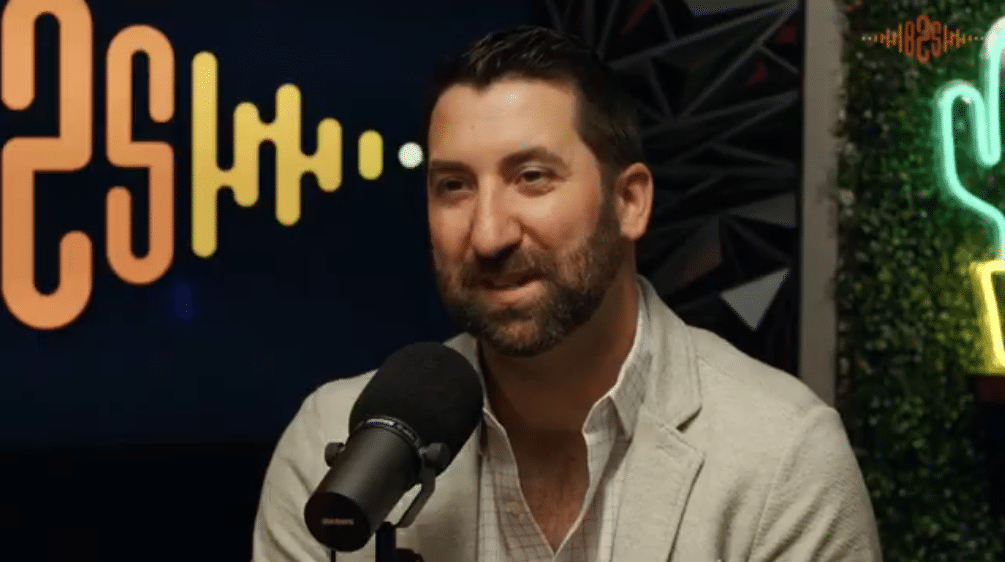
Listen to the specific part
Episode Transcript:
Transcript
Ryan Leeming: We do a lot with community engagement. We do a ton with events. So we love to buy properties that may not have a green space, and we like to figure out a way to put that green space there. And then once we have that central green or that lawn, we program that lawn with lots of events. You asked me earlier what brings me energy. I love inner redevelopment where we can do that. We can find a creative way to bring that lawn or bring that community gathering space, and then work with our marketing and events team to program it in a way that brings people to the center.
Greg Simpson: Hey gang, Greg here. Another built to suit podcast coming your way. We've been working through a series of more technical podcasts and now we're kind of in a new series of design oriented podcasts. We had Andrew Swedenberg here with us a couple of weeks ago and now he was inside. Now we have gentlemen outside. Certainly welcome Ryan Leming to the pod. Hopefully you had a wonderful trip from Boston, but certainly to have you involved with us and be down here and share kind of the developer side of design. And so I think that's kind of cool and that's kind of where I want to start. Sure. Kind of want to start with the idea of what you're doing in your day job today and how does architecture influence that?
Ryan Leeming: Sure. Well, thanks for having me. It's great to reconnect after many, many years with the Kahachi team here in Florida. So I would say how does architecture connect and what are we doing? So really I'd say my role or our role at Eden's, we're looking at investments all over the country, grocery anchored shopping centers, places where the community comes, places where we can add value to really enrich that community. That our mission at the end of the day is to really enrich community through bringing people together at our places. And architecture and design plays a huge role. One of the things that attracted me to join Eden's was the focus on design and architecture and just how particular and how important it is to us. So it's a huge piece of what we do. It's something we focus a ton on. We have a lot of internal resources and team members that are kind of in our design group, a lot of them architects, some of them engineers.
Greg Simpson: Is that unique for a developer, you think?
Ryan Leeming: I think it is unique. I had the pleasure of starting my career at a family owned Boston developer that had a same philosophy. I think that's kind of how I got my foot in the door coming out of architecture school. I was able to find a firm that really cared about design and tried to maintain as much of the control over design in-house before a project was really real. We really tried to do the planning and the design and think about the architecture and think about the merchandising and the signage and the leasing and all those things. We really tried to give it a vision internally first and then go outside and bring in that great partner, that great architect, that great team to help see our vision through.
Greg Simpson: Yeah, you brought up the word investment. So when I think of developer, generally I think of, well, they're pulling the money together, they're organizing tenants. It's not really architecturally driven. So as an architect, what are you specifically responsible for on your day to day?
Ryan Leeming: Well, one of the biggest things I'm responsible for is making sure our consultant teams and our partners get projects permitted, get projects entitled. That's a big part of what I do is driving the team.
Greg Simpson: Yes. You always focus in on the things that you cannot control. Making sure
Ryan Leeming: The deadlines get hit, making sure we get those comments back in, making sure those resubmissions happen, making sure we're addressing comments from our municipal partners and stuff. That's a big part of what I'm working on across a handful of projects in Florida. But otherwise, when I have a minute to step back and maybe breathe for a sec, I might throw something out there as a fresh set of eyes on a project. Hey, have we though about this or we though about that or we thought about how if we move this sign over here, how that might open up better possibilities for leasing or et cetera. So I'm working on something now here where that kind of happened. We had a change in a project, a large vacant 50,000 square foot box and our retail partner who we have a lease with kind of came back to us and said, "Hey, we might want more space." And we said, "Okay, let's see what that means." We had it as two retailers. We were able to make it one and provide a lot more frontage. And so we said, "Hey, I think maybe those couple of groups that were sort of, they just though it was an okay position. Now if we do this and we make this change, we'll have a lot more frontage. We can have a larger patio. Maybe we can work with a town. We can move some of this landscaping out of the way and really create this experience with this grand outdoor patio." And we did some renderings and we're now at least with a much, I'd say more impressive retail partner for that space based upon a change that we were able to position and say, look, it actually makes things better.
Greg Simpson: You brought up the Achilles heel probably of every large scale project, which is probably getting it through entitlements and permitting. Sure. But that can't give you the most energy of what you do on a daily basis. There's got to be something that really gives you energy in your day job. And so I'd be intrigued to know where that comes from, where your get up comes from.
Ryan Leeming: I would say I like the entitlement side more than the permit side. The permit side can feel a little rigorous sometimes in trying to get those things and get those permits completed and closed out and over the finish line so you can start construction while still dealing with comments and kind of getting these municipal partners what they want. So
Greg Simpson: Take a stop there and let's step back because for the young professional, they may not completely understand the difference between entitling a piece of land and then the more transactional parts of getting permitting for civil or permitting for architecture and engineering. So maybe peel back a little bit and try to shape those two, the kinds of things you have to do when you show up on site and there's something to be done, either a Greenfield piece of property or some of the transitional stuff that you guys have been doing.
Ryan Leeming: Yeah. I think the easiest way to think about it is entitlements are your planning and zoning approvals. So those are your land use approvals. What do we want to build? How big or small do we want to build? How much parking does it have? Does it meet the city or town or municipal codes for that zoning classification? Or are you asking for special permits, rezoning? They sort of say it's getting the land entitled. It's getting the approvals to have the approvals over what you want to build, but not necessarily having the permit to physically build it. So entitlements come first. It can be a very long process. It's a public process usually.You're in front of planning boards, zoning boards, you are making the pitch to the city or the town. Here's why this project is good for the municipality. Here's why we want to do this. Here's our thinking. Here's our supporting information, our traffic, our environmental, the engineering of it. How does drainage work? How are we going to treat storm water? Things like that. And then from there, once you're through that entitlement process, then you move into a permitting process where now you have final drawings. And when you're in entitlements, you might not have full construction drawings. The architect, the engineers may be at a 30, 40% level of design. You're selling the story, you're painting the picture. Once that's through, then you kind of go full speed to finishing those drawings and now you're looking to physically pull the permit or pull the piece of paper that allows you to build what you want to build.
Greg Simpson: So let's talk about, take me behind the curtain just a little bit because you guys often acquire property or acquire completed centers, centers you think you can approve without those entitlements complete. And so how do you manage that risk of, well, we think we can do this. I mean, do you solve that before you buy the property or do you kind of iterate your way through it?
Ryan Leeming: All different. In most cases, I think any developer will tell you, you want to have that entitlement risk off the table before you buy the property. That's sort of the textbook move. You want to have enough time in your contract for whatever you're buying to be able to get those entitlements completed. And a lot of times a condition, sometimes a condition of closing on the land is full, unappealable entitlements and even permits in some case, that doesn't always happen. I think sellers have gotten a lot smarter over the years. And so sometimes you have to be willing to go at risk. We've done that before. I think other developers do it, but it's not always the best course of action. But if you feel like you have the support, if you feel like you have municipal support, you can take that calculated risk.
Greg Simpson: Yeah. Obviously you and I worked on a project almost 15 years ago now, 15 to 17 years ago. It's a much different project. When you talk about your current employer, you talk about someone who likes to almost project bank or land bank and maybe kind of a different strategy where the actual improvement work may be years after you purchase. So what's the calculus behind those kind of risks? You just kind of know you can do something?
Ryan Leeming: I don't think we know we can do something. I think we know enough about the market. We know enough about the municipality. We feel good about the investment or the purchase if it's an existing asset. It may be that we can't do anything. We're buying this shopping center, we call them places, this place. And the previous owner or previous builder maxed it out per the codes. We can't do anything, but it's a great center and it's a great asset and we feel like there's still some value add through re-merchandising or some of the lighter lifts, some of that place making stuff. Can we add a restaurant here? Can we add a restaurant there? Maybe as retailers leases expire, it's less of a redevelopment in a sense of building new buildings and creating new leasable area. And it's more about elevating the place that exists to be able to attract that new segment of retailer. And we do a lot with community engagement. We do a ton with events. So we love to buy properties that may not have a green space and we like to figure out a way to put that green space there. And then once we have that central green or that lawn, we program that lawn with lots of events. You asked me earlier, what brings me energy? I love in a redevelopment where we can do that, we can find a creative way to bring that lawn or bring that community gathering space and then work with our marketing and events team to program it in a way that brings people to the center.
Greg Simpson: We'll get to placemaking. I think there's a whole conversation about placemaking and architecture. Let's go back because perhaps you didn't even know what a developer did when you were in architectural school. So let's go back and figure out your architectural journey because I just think it's really kind of enlightening for you to go on the journey you've been on because most of us end up where we do, end up in a technical role for an architect for a number of years. But you kind of were heading down that path. You interned in a lot of different places in school. So let's take your school journey.You're a formally trained architect. Where'd you go to school?
Ryan Leeming: I went to school in Boston. So I grew up in Rhode Island and wanted to go to Boston for school. It was close enough, yet far enough. It's always good. And it was a city. I don't know why. I don't know what taught me or trained me to think this way, but I said, Boston's a big city. There's probably lots of opportunity or there's just more happening in Boston, so I want to go to school in Boston. I went to a small college just next to Northeastern University called Wentworth. I'm of the generation where it is, you have to go to college, you must go to college because that's how you get a good job. And so I said, okay, a college is a means to an end to get a good job. And Wentworth has this co-op program that helps you get a job. And I'd say at the time it was priced fairly well, so it made it attractive. I also played ice hockey my entire life and they had a D3 ice hockey team that was pretty decent. I actually had an old friend that kind of grew up in my neighborhood that also went to that college.
Greg Simpson: I must digress. Ice hockey. I just think about that. What is the rough and tumble ice hockey guy and the developer? Do you use those skills ever in work? Not at all. Not at all. You can't slash somebody you don't like.
Ryan Leeming: Yeah, I was never really that good at playing. I was sort of mediocre at best at hockey. My father was an ice hockey player his whole life. He's a goalie. My younger sister still plays goalie to this day. And so he really pushed me in ice hockey at a young age as the sport I was going to play. And it was awesome.
Greg Simpson: It's funny. I have a sister that figure skates and still teaches skating in Texas and a daughter that skated till she was 14. And my claim to fame is I couldn't skate at all, but I worked in an ice rink in college and I resurfaced the ice. Y did
Ryan Leeming: The Zamboni
Greg Simpson: Guy. I drove the Zamboni. Yeah, I love it. And that is not the easiest thing to drive. I will tell you, you can slam into the boards. Pretty cool. But it's a neat intersection of just where you start and that you don't really start in a place that you end up. And I think your story's incredibly unique is that the co-op program at Wentworth took you to a place where you really got a broad array of experiences, not just architecture, but structure and other things. I mean, how did that shape you wanting, you're wanting to learn, you're searching, you're curious, and then you figure out who is this developer guy?
Ryan Leeming: Yeah. So in architecture school, I really enjoyed that visioning process that it was like the concept process as it was taught to us in school, coming up with the concept.What's your concept? What's your concept? What's your concept? And I enjoyed that process and kind of going on the journey to figure out what your concept is and what is influencing your concept. When the co-op thing came into play, I was a sophomore and I grew up in Rhode Island, so I was able to get an internship at a Rhode Island based architecture firm where I learned a lot about really what an architect does. And they moved me around in that. It was great. It was a great experience. I got to shadow a lot of different people and in shadowing the CA or the construction admin person, he started talking to me about the relationship between the different folks. He's the guy out in the field. He's the one dealing with the owner, the developer. And I'd say -
Greg Simpson: He's the one bringing the issues back too. Right.
Ryan Leeming: "Man, do you know the developer, the owner?" I said, "What are you talking about?" And he really taught me about the relationship between the different groups and who does what. And this firm was in an old mill complex and part of the mill complex was being redone into apartments, like loft style apartments and the firm was doing the project. So I got to go out onto that construction site almost whenever I wanted. I'd say, "Hey, can I go take a look?" And they'd say, "Yeah, sure." And they'd throw me a clipboard. And I didn't know it at the time, but I was sort of doing punch list work. They'd say, "Hey, here's a clipboard. Walk around, see what you see, bring this guy with you." And so I started to learn punch list work and I started to see the owner, architect, engineer, sort of saw them all on site working together. And I learned more about the relationships between the two. And I started to talk more with folks there about, as we got involved in the design side of stuff, I sort of piped up a little bit. I sort of got more passionate
Greg Simpson: About that. So is that what caught your imagination about that old mill project was being able to see something that was in place, but you're kind of, "Wow, how'd this happen? How did this get ideated?" Absolutely. Because I get the sense that you may do the details, but it probably doesn't get you up in the morning. It's kind of that higher level ideation visioning that gets you there. So you were able to see something in a transaction where you were walking around going, "Well, maybe that paint scratched there, but you could take it back upstream." That's a really cool kind of observation that you can make as a young student.
Ryan Leeming: Yeah, definitely. That project and some others sort of turned me on to, okay, the architect, here I am a young college student thinking, learning about great global architects that create these great buildings and learning about Norman Foster and Renzo Piano and Frank Lloyd Wright and all these guys. And I'm thinking, "Oh yeah, they just show up and build the building." That's what architects do. They create the whole building start to finish. And that's not really the case. There's a team of folks and there's a lot of partners involved. And in a lot of cases, I noticed even in sitting in meetings that the owner or the client sometimes would say, "Hey, what if we did this? Or what if we did that? Or what if we did that?" And in some cases, the architect would say, "Well, I don't think that's a great idea. Here's why it's not a great..." But they might, "Oh yeah, that's an excellent. Ryan, take that down." So I learned there was that back and forth, that give and take there. So that's what got me. I'd say that first job, it taught me about who a developer is or what a developer is. And from there, the next few years, I did a lot of research.
Greg Simpson: So who pushed you not only into the research, but where did you have that epiphany that, hey, maybe an architectural, a pure traditional architectural career is not for me, that maybe I need to abandon the traditional role and then embrace kind of something that's more hybrid. At what point was there a road to a maius moment? Was there somebody that particularly got you involved in that or was it just something that you kind of over time just developed?
Ryan Leeming: It was that first internship I think that really taught me about the role of an architect and the project team. And then as I continued through school and I continued through the co-op program, there was also an individual, a friend of mine who was a little bit older than me, who also had an interest in real estate. We were friends. I played hockey with his younger brother, so I knew who he was. I reached out to him and we got connected and said, "You're interested in real estate, right?" And he said, "Yeah." And he kind of had some of the same thoughts as me. He's like, "Yeah, I like the architecture stuff, but I'm a little bit more interested in sort of rehab of old buildings and creating things." And so my second co-op, I ended up working at a structural engineering firm to see that side of the world. And then my last co-op I worked, I actually went to work with the friend I mentioned who had created his own business working for developers in and around Boston, doing floor plans, doing as-builts. We knew how to use AutoCAD. So he used that as a way to find some clients and some folks and network and kind of get into that community. And so now we were working on, oh, so-and-so has just bought a building in Back Bay and it's a 40 unit apartment building and he has no plans. So we're going to go and we're going to draw the building for him and that's going to give him what he needs to now figure out what he can do with it. So it was kind of like a consultant architectural services type business where this gentleman was able to really work for some great small local developers in and around Boston. And so I got to see that side of the world and think, okay, this is cool. This is where I want to be or this is what I want to focus on, trying to find a way to maybe work for someone like this.
Greg Simpson: Kind of a scruple question. At what point do professionals become professionals? Meaning I find that young employees that come into our profession, sometimes they pretend to understand. I mean, do you have any advice for somebody who it's okay to learn? Yeah. It's okay to connect. You have to have those people, young people in your midst in the developer community, but how did you navigate that?
Ryan Leeming: I definitely was that young grad who came in and was a year into the job and thought I knew everything and I had to get pretty humble pretty quick.
Greg Simpson: I think we all do, Ryan. I think that's the thing that I don't think. I think the young employee of today thinks they've left school and they have to know as opposed to how do you create that journey, the journey of learning. And I think your wentward journey, especially your working at multiple places, I think to me that's an incredible kind of way to see the edges of the box.
Ryan Leeming: Yeah. I think you have to create an environment for those young people where it's okay to, you support them through their learning or support them through them falling down. It's how you learn by making mistakes. So I think you have to create environments that allow for that and let it be known that it's okay not to know everything. The expectation is not that you know everything. The expectation is that you keep an open mind and you work hard and you absorb everything you can, you learn what you can and you learn through that process and you grow through that process and we're here to catch you if you fall.
Greg Simpson: Sort of. We won't let you get skinned too much.
Ryan Leeming: But it's okay to fall.
Greg Simpson: It's
Ryan Leeming: Okay to fall down. I mean, I think that's how you have to do it.
Greg Simpson: I've always believed, and maybe I'm not the quintessential architect, the best idea should win. And I don't have that viewpoint that my idea is always the best idea. Now in the absence of idea, I tend to jump in, which is probably not one of my better attributes.
Ryan Leeming: I'm the same way in that, like I said, if I feel like the team is stuck on something, I will oftentime jump in and try to help. Someone once taught me early in my career, they said cutting that path or first journey or whatever is sometimes the hardest thing to do, is sort of taking that initial pass is sort of harder than -
Greg Simpson: Oh yeah.
Ryan Leeming: And so I think from an early, I was always like, okay, let me try to throw something against the wall that at least gets a discussion going even if it's wrong. Well, we can't do that because of this, but we could do this or we could do that.
Greg Simpson: So it's okay being wrong. Absolutely. It's okay. I think ideation is about, what's the Edison line? I didn't learn how to make a light bulb. I learned the 500 ways you can't or something in that
Ryan Leeming: Vein. I think you're going to be wrong in that there's a reason site plan 252, there's a reason you do 300 site, right? Yeah. You spend a year being wrong or you spend time being wrong and figuring it out and figuring out what works.
Greg Simpson: Something close to your heart, place making, I'm sure, because a lot of what you're not able to do in retail and grocery is to influence the inside of space. You tend to be, I don't know if you're relegated to outside space as a development architect or a development developer, but certainly the most impact that you can have is the glue and would take maybe Palm Beach Gardens, the project that you're kind of working on over the past few years here. And so you're taking over what should be a mature project. There's some issues with it. I mean, you get on the site, you walk on the property. What do you feel is missing straight up?
Ryan Leeming: Well, it was still under construction when we acquired it and it was significantly vacant. So it definitely needed to just be complete. We needed to get the construction fencing out of there. We needed to finish construction. The shopping center was open and operating for years while still under construction. So the community had become very accustomed to shopping in a construction site, which it's not pleasant. You can do it, but it's not always the best journey for the customer. So we knew it needed to be complete. We also knew it needed some life from a merchandising perspective. There's an internal, they call it the strand, the internal walkway. There was definitely some pockets that were vacant that just didn't have much energy. So it needed some merchandising and then it needed a little bit more from that placemaking element, people to hang out, people to find a reason to stop for a minute. So those were sort of some of the quick things that jumped out. There were definitely areas in the project that just felt asleep that needed some life.
Greg Simpson: Yeah. You introduced a word that I had not been connected to, jewelry.
Ryan Leeming: And what does that really mean, place making to you? Yeah, me either prior to Eden's, which is cool. I don't know who I have to give credit to for coming up with that, but we call. So all of the furnishings on site from furniture to trash cans to art, the art program, art is a huge part of what we do. Anything that sort of goes on the site at the very end, we call it the jewelry, right? So it's like the accessories of the project.
Greg Simpson: Bling, bling.
Ryan Leeming: Right, exactly. So we call it jewelry.
Greg Simpson: That's really, really cool. I've never heard that term before and I just though that - And we spend a lot of time on it. It actually says a lot. So if jewelry is like flowers and color and furniture, why does that matter? Why does that matter to the customer?
Ryan Leeming: It softens the environment. It makes it feel human scale. I think we love to, where we can, we love to invest in unique furniture or even unique pieces. Palm Beach Gardens is a great example where, again, looking at other groups and what they've done and trying to learn from what they've done, this is not an original idea, but we put a small seating area in Palm Beach Gardens and we had power outside. We had power outlets everywhere and we bought an old retro fridge. We plugged it in and we put some decals on it and our marketing team keep It's stocked with popsicles and ice cream and books. And it's like this cool retro fridge in the middle of the concourse with the seating area. And people are constantly walking by and they're like, oh, let's go grab a popsicle or let's grab a book. We've seen grandma and grandpa taking the grandkids out and they're like, grandma, you got to see there's books in the fridge.
Greg Simpson: Books in the fridge.
Ryan Leeming: And so we love to do the pocket library or the little libraries. That's one of our things we love to do. It gives people a reason to just sit for a minute. And so we said, how do we take this cool retro fridge, it's hot, give people a minute to stop and grab a popsicle and read a book.
Greg Simpson: So is that just an indoor outdoor environment?
Ryan Leeming: Fully outdoor.
Greg Simpson: So basically you're in Florida, you're balancing rain, which is probably every day at five or if the wind's blowing in the other direction, every day at 11:30, either one. So how do you, as a placemaker, how do you balance sun and shade and rain and canopy? How do all those things come into play? Because those become things you can, as a developer, you're going to want people to stay there longer, don't be impacted by the rain. Did you all think about that at Palm Beach?
Ryan Leeming: There were a couple elements. One in particular that we had heard about through working with the city. There was this canopy that they wanted to connect. There were two areas where you came underneath an arcade and you came to where the arcade ended. And then on the other side there was a canopy that picked up and they wanted this freestanding thing in the middle to connect the two. And we said, okay, what can we do here? And I worked with our design team and we ended up coming up with, we worked with a local group, a canopy company to create something. They had an off the shelf, call it traditional product, and we modified it a little bit. We changed the column spacing on it a little bit and we bought it, installed it. And then there's a great group. They have three offices. We work with them a lot. They do faux floral installs. And so we had the canopy up, took a photo and said, "What would it take for you to come and wrap this thing and faux florals and make it look just like this rendering?" And they said, "We can be out there this weekend." And so for a fraction of the price, we went ahead and chose to go faux. And these are really high quality. So to the consumer, you would think it's real. My wife, she's not in real estate. She's like, "How did you get these to..." We've done them in other parts of the country. And she's like, "How'd you get these to bloom in winter?" I said, "Well, they're fake." She's like, "You're kidding me." So we actually, we use faux quite a bit where it's applicable, where it needs to be up really high on buildings. So we did that and we finished this canopy out and we created this great floral centerpiece to this project, to the section of the strand that kind of was a dead zone. And then we also gave the city the canopy that they wanted to connect the two. And then we ended up putting a bunch of swinging benches in and stuff. And it's now a place where people hang out and it's kind of become this centerpiece.
Greg Simpson: I'm trying to understand when you right size it from large place, which we've all seen, which could have green, a big green, a big play area and all these things and how when you're working in a 20 to 30 acre site, it's a much different shape to the problem and kind of bump into one of my favorites, grocery, everyday life. But it's like, why is grocery such a really powerful place? It's not just simply another big box. It's kind of important. What makes it important, do you think?
Ryan Leeming: I think even more so today, people are focused on high quality food or good food or reputable food. And so you see grocers expanding. And I think at the core of it, it's really important that it provides that community necessity and it provides that every day or every couple of days repeat consumer. It is the anchor in a lot of cases.
Greg Simpson: Let's talk about anchor because you're having recurring trips to this place. We thought in 2020 that we were going to have our stuff delivered home. That's turned out for a broad array of us. That's really just not how we shop, not routinely shop. There may be stuff that you get for convenience or otherwise, but what does that recurring trip to the grocery store mean for the other tenants in the center?
Ryan Leeming: I think it means footsteps. It means you have a consumer that's there. People often come to our places three to five times a week and it provides that opportunity for that cross shopping. Okay, I know I have to go get groceries, but is there something else I can do while I'm there? Is there a coffee shop? Is there a bookstore? Is there a boutique, hair salon, a lunch place? What are those other elements that we can bring from a merchandising perspective that the grocery shopper that needs to go there out of necessity, out of wanting to go grocery shopping, how can we keep them there or how can we provide more for that consumer, that guest to stay at the property and patronize more businesses?
Greg Simpson: That's
Ryan Leeming: Kind of a philosophy we think about a lot.
Greg Simpson: So you're out there looking at dirt, probably improved property, which is kind of Eden's fortes to find something that they can either bank and improve or improve. How quickly do you look for stuff with grocery anchors specifically? And maybe the second corollary to that question is if you don't see one, how quick do you test for one?
Ryan Leeming: Immediately.
Greg Simpson: Is it just that important to a small center? Is that what it is?
Ryan Leeming: We think it's that important really to the ecosystem of the property in that merchandising mix. We want people to come and visit our places multiple times a week. We feel like having a grocery store anchors that, not to use the same word, but it kind of anchors that trip or it anchors that footstep. So yeah, we're primarily looking at places that have grocery stores. If it's a great asset that doesn't have a grocery store, we will immediately try to figure out who's missing and we'll immediately try to have a conversation with them to understand, "Hey, is this a market that you're interested in? We're looking at something. Is this something you'd be interested in if we might figure out how to take a pass at it?" And oftentimes we'll get that feedback. It's not really for us. Obviously we love what you guys do, but it's not a market we're looking in. Or yes, we would love to be there and it would be even better if Edens was able to get this property and we were able to partner on something here.
Greg Simpson: Technology.
Ryan Leeming: Yeah.
Greg Simpson: AI, a pejorative for most young people these days. I'm not really exactly sure why. Maybe we start there, kind of a broad question of what do you think the young person struggles with these types of forward thinking technologies like AI because they seem to not like them. Really? In the sense that it's going to take their job or it's holding them back. I mean, what do you think? I mean, we've had commencement speeches where they boo the speaker because they talk about AI. I'm just trying to understand it because I see it as a potential great accelerator for the kinds of stuff we really just don't want to do.
Ryan Leeming: That's a good way of putting it. We're very focused on it right now. We have a lot of different groups and committees inside at Edens thinking about the right ways to utilize AI and how we can utilize it correctly and in ways that actually help us. I think I'm starting to see that shift a little bit more from, okay, it's not going to take my job, but I should know enough about it to know how it could help me or how I could utilize it to make me better at my job. A gentleman on our team, I was on a call and I though it was a really great quote. I don't know where it comes from, but said, "Trying to utilize AI in a way that allows humans to do what humans were meant to do."
Greg Simpson: I think it will radically transform architecture and engineering over the next five to 10 years. And I think the people who are doing the same thing over and over again, I think there is a challenge for their job. I think the people who evolve into being able to be more the orchestrator and be able to understand it and to be able to communicate, because I think we're going to communicate differently with the computer. For the last 50 years, we've communicated with the computer with a keyboard and a mouse, and that has been our input device. I think that's likely to be the biggest, most radical change, but you sat in our VR lab for a few minutes. I
Ryan Leeming: Did. Very
Greg Simpson: Impressive. And we have a belief that although VR has been around for a long time, there's probably an evolution of VR and there's probably not too far from now where we might drive some VR with AI in terms of cost data and some other things. I mean, where do you think that fits for the development community maybe?
Ryan Leeming: Well, from what I saw and what I walked through, really impressive from that early visioning, being able to understand the scale, being able to physically walk through a project. Early in my career, I think we struggled so much with what was the capabilities of technology because folks would say, "I want to see what it's really going to look like or I want to understand what it's really going to feel like to walk through this project or to be at this project." I think you can completely do that now with what I just experienced.
Greg Simpson: The gaming engines have really transformed what can happen. There is an element of complexity still. There is a time factor, but I think those gaps get closed over technology and automation and AI and a bunch of things. I think those things close over time, but to use a gaming engine that the Mandalorian was created under effectively, and so you're being able to trick the mind into realism.
Ryan Leeming: I think the other thing too that I would be interested in maybe bouncing this off some colleagues is one thing that we typically see in our projects, in our redevelopment projects is that sometimes leasing velocity is slow at the beginning, not because we're not marketing the property, we're not having those conversations. It's because the project's not under construction yet. We might be going through the entitlement process. We might be going through the permitting process. We have a great book, we have great renderings, we have a great story, we have the demographics, we have all the things a retailer wants. But oftentimes what we see is that when we're under construction and we can physically show people and say, "Yeah, the project is happening. Look, the building's coming out of the ground." We find that there's a pickup in leasing velocity. And so maybe this tool is a way to -
Greg Simpson: You think you might be able to shortcut them or kind of short circuit them into envisioning the space before or earlier on in the process? That certainly probably could help you guys, right?
Ryan Leeming: I don't know. But in flying around in it, it gave me that sense of, okay, this is what it feels like to walk through the property and here's the central green space and the art program and the furniture and all those things that.
Greg Simpson: Did it make you want to go there?
Ryan Leeming: Yeah, it did. Absolutely.
Greg Simpson: That's cool.
Ryan Leeming: Yeah,
Greg Simpson: Absolutely. That's cool. I think we may be asking too much for it to be a quid pro quo for leasing, but I think being able to maybe be that tipping point for, "Oh, so this is what you were thinking." And certainly that customer, they had a lot to say as a developer about how they wanted to execute. It is a traditional power lineup with a large big box in a mini town with a whole bunch of new restaurants for that trade area and they're going to love it. But I'm not sure that they've been able to use tools like this to kind of pre-sell it. I was intrigued, what's the value you think of pre-sale like that? You think there's some value to it?
Ryan Leeming: Absolutely. Yeah, absolutely. I mean, one of the things we are always trying to solve for or we're always trying to strive for is getting retailers open sooner or quicker or speed to market is a big part of what we do. And if there's ways to partner with retailers, get them signed up quicker, get them open quicker, I mean, it's good for everyone, right? It brings community to the project sooner, et cetera. Yeah, I think if there's ways to do that, I'd really be interested in seeing what others think about that tool in particular.
Greg Simpson: Final track. You got 20 years plus or minus in your career right now, a lot of tread left. What do you envision yourself wanting to be able to do? You feel very entrepreneurial, and so what do you feel like your legacy, you want it to be?
Ryan Leeming: That's a great question. I don't know if I'm thinking that far ahead.
Greg Simpson: Well, you got a five-year-old, so you got college still.
Ryan Leeming: Yeah. One thing I really enjoy doing, Princeton, I keep going back to it, but Princeton is a great example of where it had such a community impact, the redevelopment and revitalization of that kind of historic community center. We do a great job over the summer of programming that property and we do concerts, we do a beer garden with the concerts, and it's really a place where the community comes out to. And so every summer we try to go down, I go down, some other teammates go down. This past June, my wife, my daughter came, we put a playground in at the property. And so being able to share that with my family and being able to show them, "Hey, look what we did here," is really rewarding. So I'd love to do more of that in some way, shape or form, whether with Edens, maybe in the future, potentially on my own, who knows?
Greg Simpson: Do you have that desire to maybe at some point, just not control. We described that word as a bad word, but really steer something that can be as much a financial reward as a legacy reward.
Ryan Leeming: I would love to. Yeah. I think anyone who gets into real estate development, I think everyone is always thinking about that in the back of their head. Wow, wouldn't it be great to invest in something in my community or take what I'm learning and apply it in my community somehow? It's all about finding the opportunity. I think that's what I want to continue to do. I'm doing it. Well, certainly
Greg Simpson: You can do it on the platform that you have. Absolutely. So you'd be able to. And in fact, I will not be any more of an entrepreneur than I am today, but I've always had the belief, even when I came here in 1999, I had the belief that I wanted to leave it better than I found it. And I think that really. I'm really impressed by that, the way you carry yourself and the way that comes out is it's not just a financial transaction to either you or even to Edens. There's a life component to it that this matters to somebody, having this thing here matters and making it better matters. And I think too often we get caught up solely in the, okay, we're going to knock that down and build a Chick-fil-A there or we're going to do whatever and it doesn't matter. It's just commerce. So I really like the way that feels and I got to believe that's not just you, that's kind of a corporate philosophy.
Ryan Leeming: 100%. I was going to say the team's philosophy is really make it better than the way we found it in rich community and bring the community together and that will help the business, right? It's sort of like if we can lead with that piece, that human element, bringing people together, the community element, the business kind of takes care of itself and we've proven that out over the years.
Greg Simpson: Final question. Things change fast. I think things are changing faster now than they were when I came in 26 years ago to this firm. If you look down the road maybe five years, what are we not talking about today that we probably will be talking about five years from now? Is it technology? Is it home delivery? What do you think is going to emerge here?
Ryan Leeming: Flying cars? No, I don't know.
Greg Simpson: I think those are coming actually.
Ryan Leeming: I think they might already exist, right? There's a term for them, the one person, whatever their. I don't know what they're called, but I think one thing we're seeing now that may continue to push and to evolve is we invest in community places. We're seeing a big, I'd say push and evolution in the service side of our industry through med spa and wellness as a big trend. We're seeing a lot more retailers and startups, new brands being created around that concept that want to be located in a high quality, Whole Foods, great grocery anchored place where their consumer is. They want to attract that type of consumer. So we're seeing a big push there with a lot of that. I think that will continue to expand and evolve over the next five years. And the other thing we're seeing a lot of more now, which actually you guys are probably a little bit more the expert on, is the e-grocery side of the business. I had the pleasure of working with Wegmans grocery stores in my past, still keep in touch with those guys, great guys. My relationship over there, we were just catching up months ago and said we're investing heavily in sort of the online e-grocery space. And what I thought was really interesting, you said, "It's really not about one specific way. We just want to provide better service to our customers to get them groceries however they choose to get them. They don't want to come into the store. We want to make sure it's a frictionless process to get groceries delivered to their home. Or if they want to come pick them up and have us load them in their car, they can do that too. Or if they want to come to the store, they can do that too. It's about providing the experience however you choose to get your groceries and just providing those opportunities. I though that was actually a very profound light bulb in my head went off.
Greg Simpson: Yeah, that whole meet them where they are as a customer, I think is what we expected in 19 and 20. We saw that escalation and obviously we were kind of hunkered down in our homes and we really thought everything was going to be hybrid or work from home and none of that has really panned out to a large degree. So I think it's dampened the spirit of online, but I also think that the thing to unlock is cold chain. I mean, if you can unlock cold chain and keep the stuff from going bad, then I think there's a use case. Then I think there's a use case to bring it to your doorstep. But I think that has been the quandary of you get milk on your doorstep and you're not there and the clock is ticking. So those kinds of things, I know we've had in garage delivery and we've had boxes or come into your house or we virtually tried everything over five years, but I still think that's the big friction point apart from the fact that a lot of us still like to pick our vegetables. Yeah, absolutely. So meeting them where they are, I think is probably maybe the most profound place to be. Ryan, thank you.
Ryan Leeming: Sure. Thank you for having me. Honored to be here.
Greg Simpson: Certainly we'll leave it there for today, but wow, design and development, it is an interesting place, confluence where I think your skillset is incredibly useful for a customer or certainly a client like Eden's who wants to create place and wants to be a part of that.
Ryan Leeming: Well, thank
Greg Simpson: You. So everybody, Ryan Leming, vice president, development and construction for Eden's doing work primarily in the state of Florida, but everywhere Edens does their thing. Certainly like you to join the Build to Soup podcast. It is served where podcasts are served. So check us out there or check us out on the Built to Suit podcast website. Until next time, this is Built to Suit, Built to Build. What's next? Have a great day.
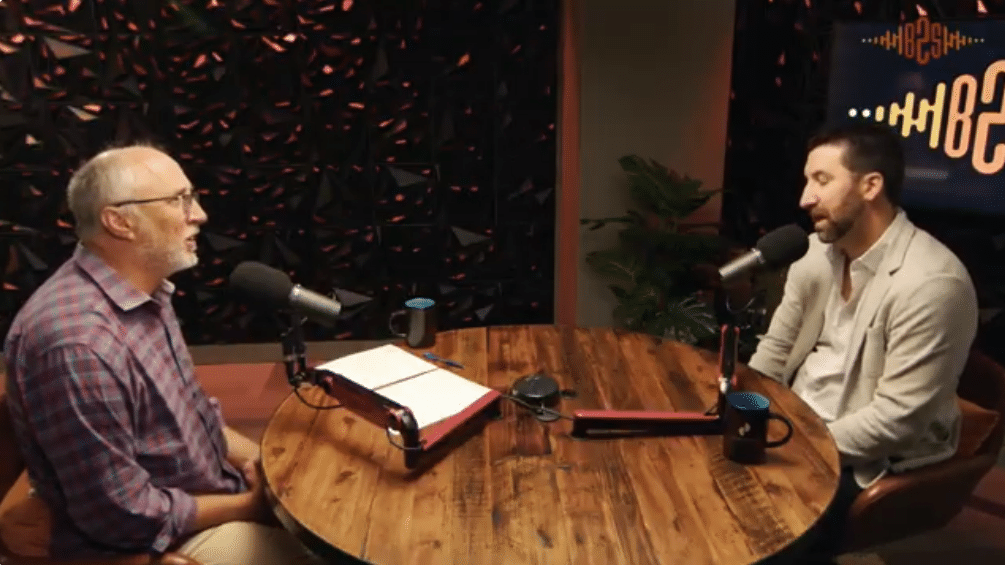
Meet your hosts:
Greg Simpson
Host