
Navigating the Refrigeration Transition with Ron Grabowski and Kyle Klahre
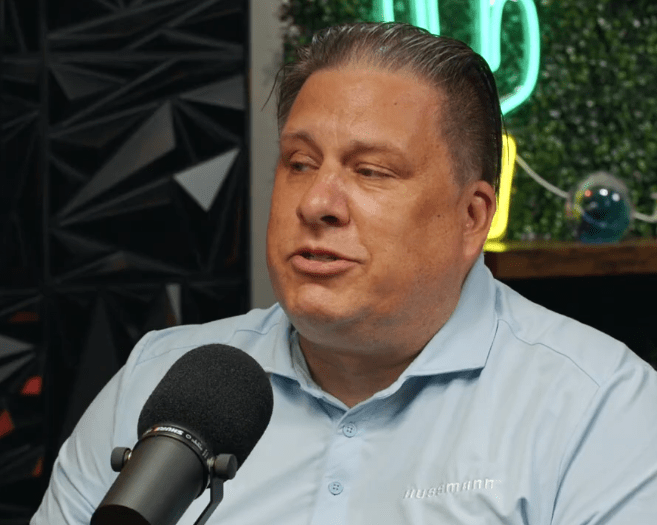
Listen to the specific part
Episode Transcript:
RON GRABOWSKI: You have to leverage a lot of diferent people because there's not one true expert tied to this right now, especially with what is going on with the AIM Act and all these regulations.
GREG SIMPSON: Hey gang, welcome to the Build to Suit podcast. I'm Greg Simpson and this is the show built to build what is next today. I have a really difficult topic to explore and I've got some really intellectual people to help me do it. Across from me today is Ron Grabowski, probably one of the most respected OEMs for refrigeration equipment in the country and beside me is my seeing iHuman is director of -
KYLE KLAHRE: Refrigeration.
GREG SIMPSON: Refrigeration for Cuhaci Peterson Architects and that is Kyle Klahre. And what we want to do is dive in head first because this topic, refrigeration and refrigeration transition is a really difficult topic to have both an intellectual conversation and one that you can actually understand, especially probably from the people you're talking with. So you must be uniquely qualified. You've probably done refrigeration for the last 30 years of your career. You probably are well schooled in it or maybe not. So talk about your beginnings in this because I find it very interesting that your knowledge level doesn't come from a super long history.
RON GRABOWSKI: It doesn't. Thanks, Greg. I've been doing this for about 10 years now, specifically about six plus years in commercial refrigeration. And my background, I feel like where I was at, I started off in automobile electronics out of school for Motorola. Then I went into contract manufacturing. I actually worked for some Silicon Valley high tech startups. We were growing glass, which is pretty unique. And then I got into commercial doors before going to metal roofing and then here I am in commercial refrigeration. So no, I don't have that level of knowledge of 30 years, but it feels like I've went six years of going from kindergarten to getting my PhD.
GREG SIMPSON: Okay. So you've started in 2019 in this particular industry, but yet you had to be jumping into the deep end of a pool. This had to be really chaotic early on about what the scope of what it was because as far as I know, AMAC had already been passed when you came in so you're already reacting to legislation that may not be implemented or written, but certainly stuff that the industry's talking about.
RON GRABOWSKI: Well, before AMAC got involved, I jumped into the fire essentially. And what I mean by that is the DOE energy regulations. And six months in, I'm making very big decisions for the company because of the energy efficiency requirements that DOE had for condensing its compressorized systems and evaporators. And then AMAC came. So when you go back to chaotic, yes, the key term is chaos.
GREG SIMPSON: So you've worked in seven industries leading up to this industry. I mean, you've told us how you ended up here, but how does what you did prepare you for what you were going to get into?
RON GRABOWSKI: Yeah, I think the piece of that is this. My experience with learning and dealing with people and understanding what their needs are from a marketing perspective and this really interaction perspective has allowed me to take information, take the difficult part of it out and make it easy and articulate to allow us to go on a broader scale and then from there, leverage my communication and skills in terms of dealing with people to influence and get what I need to get done and leverage them who have the 30 years experience or 40 years experience in the industry to get the answers I need.
KYLE KLAHRE: So a lot of good mentors is really what it boils down to early on.
RON GRABOWSKI: Well, I don't know if it's mentors. It's just like this is like the... You have to leverage a lot of different people because there's not one true expert tied to this right now, especially with what is going on with the AIM Act and all these regulations.
GREG SIMPSON: We're going to turn our attention to the AMAC. So I'm going to pull you in, Kyle, real quick. I get the broad understanding of the ACT is to phase down the HFCs, both production and consumption, right? There's both sides of that, but can you just give us a little depth on AIMS specifically and what it's driving inside the industry?
KYLE KLAHRE: Yeah. I mean, so it's driving a lot of risk for retailers, right? It's opening up risk on the side of what system do I use for the next 10 to 15 years for my store? It's opening up risk of what if I choose the wrong system? What does it mean for us? There's a lot of small grocers out there that maybe can't explore different options so they need to hit it right from the beginning on that first try. So it's really opening up more risk for the industry.
GREG SIMPSON: So how do you view that?
RON GRABOWSKI: I couldn't agree more. Just from the vantage point, based on retailers and where they're at and the amount of capital they have, many of them look differently in terms of what they're going to do because of their money situation and what they want to spend money on, or if they even care. I mean, some just don't even care about the regulations they're going on. I'll deal with it when the time comes. I'm trying to sell food.
GREG SIMPSON: So this happened in 2020, Kyle?
RON GRABOWSKI: Yep.
GREG SIMPSON: So you say this really started a lot earlier than 2020. How can you look at the roots of this and where do you date it back to sort of?
KYLE KLAHRE: Yeah. I mean, so it all really starts back in the 1980s. NASA and a bunch of really smart people, a lot smarter than all of us here. They found - Rocket, science. Rocket science. Yeah. That's awesome. So they found a hole in the ozone layer and what that was eventually contributed to was the aerosol sprays and then refrigerants we were using. So that was the first hurdle of regulation. From that, what really started was the phase out of certain types of gases that are using chlorine. That has since for the most part been phased out across the world. I think Ron, you would say maybe not really across the whole world, but in the US for sure. And then from that, we were solving one problem with another problem. So we fixed the ozone depleting substances, but now we're having higher global warming potential. So it's solving one with another. So the next phase of regulation is attacking the global warming or the GWP.
GREG SIMPSON: So the countermeasure that the federal government has put out is really reactive, not proactive. It sounds like states kind of ran out here and did their own thing. Talk a little bit about what that feels like as an OEM and how the states have kind of shaped not only the federal legislation, but has kind of shaped the frustration of different regulation. How does that feel?
RON GRABOWSKI: The Climate Alliance came around 2015, 2016, and essentially it was 24 states and two territories and they weren't happy with what was happening with the federal government. And that's really why the AMAC came around because they were trying to find a way to consolidate what all these states are trying to do so not everyone's doing their own things. We were preparing to make those solutions available that they were acquiring based on these regulations. We were adjusting already for that, what was going on with those climate lines of states, what was going on in California. California's been pretty progressive for a long time, but even more so on the regulations and what they came out with CARB, the California Air Resources Board. So the AMAC was supposed to address all this, right? And then consolidate what those states were doing so that it wouldn't have what you're having right now with New York and Washington and California and there's a lot of push to still try to have that happen. But from an OEM perspective, yes. It's been hard to manage because we don't know what direction the states would go and we don't know what directions at the time retailers would go.
KYLE KLAHRE: Yeah. And if I can jump in. So the AIM Act is really there to set it standard across the whole US. So it's not a bad thing and it's also making everyone healthier is really what the goal is, right? It is saving our earth, but we have to make sure that we're fully understanding what's going to be happening here and that the regulations make sense across the board.
RON GRABOWSKI: Yeah.
GREG SIMPSON: I think this is a really good place to throw the politics in here just a little bit, not from a which side of the aisle you are on, but from a general understanding of who's in charge when certain things are happening and why it has been so difficult to get to a codified kind of written standard of the EPA. So if you have California, New York, and some of these states in the 16, 18 range pulling these things together, they probably do it as a countermeasure to a Republican administration because they think the Republican administration is going to deregulate, not regulate. That challenges the Republican administration to deliver AIM in 20, but the rules get written in a Democratic administration in 22 or 23 and now we get back into a Republican administration and we're changing some rules. Is that a little painful to have to go through all of that in that way or just getting the legislation passed gives you a path to success?
RON GRABOWSKI: It's painful and it's painful because it forces manufacturers to make investment decisions in terms of where they put their eggs in and what they develop. And because of these changes, we see on both sides of the fence where some manufacturers want the dates that the AMI Act and the technology transition role came up with to stick, whereas others are concerned about the impact if they don't move it out. The change and all the codes required to make these solutions available is not moving fast enough and because of that, it's going to create problems potentially in markets that are served.
KYLE KLAHRE: And that's really where our crossover comes in, right? It's your dealing with the UL side and the equipment side, but then we're dealing with the building code and ASHRAE 15 and different safety standards we are working with. So it's that merging of our two to be able to come up with a solution at the end.
RON GRABOWSKI: Correct.
GREG SIMPSON: Okay. You guys wrecked into technology transitions rule and that's probably one of the big sticking points of where the legislation is. Let's get to where that is, where we stand currently here at the end of the first quarter of 2026 about where that rule is, what's proposed and how we see this playing out if
KYLE KLAHRE: You
GREG SIMPSON: Had to be a sous sayer for a moment.
KYLE KLAHRE: Yeah. If I pull my crystal ball out, then I'll tell you what's that coming. So there was a reconsideration last October. They have since released a proposed ruling, which will push dates out to 2032. It's yet to be seen if it's going to stick. Most likely, yes, but maybe they're going to reel in dates, make it 2029 or something else. So all that's yet to be seen. So as of right now, the original ruling is law up until that next proposal or final ruling comes out.
GREG SIMPSON: Now you've also described other things about the legislation that are still enforced but not being enforced.
KYLE KLAHRE: Yeah.
GREG SIMPSON: So talk about those a little bit.
KYLE KLAHRE: Yeah. So the condensing units, and this is your sandbox now too, but so the condensing units as of right now we have to be below 300 GWP. Having said that, the proposal will push that out. So the federal government has said, although it's illegal, we're going to not enforce it for right now based off of this proposal. So it's putting retailers in that middle ground of, do I do it? Do I not do it? And I think you would want to chime in too about what customs take on it, what are you guys doing? Are you still creating condensing units or selling leftover condensing units?
RON GRABOWSKI: Well, we can still sell replacement equipment all day long as long as it meets the requirements of the technology transition rule where you can exceed 75% replacement of evaporators or 100% of the connected load. So yes.
GREG SIMPSON: Before we move on, we've got this patchwork of state regulation. We've got a AMAC that's not fully implemented. What are we doing in those states until this gets done? Is there a federal supremacy in this legislation ultimately that the federal law will supersede state law or does the federal law just have to completely cover the requirements of the state law for that to work?
RON GRABOWSKI: So the states in some cases will supersede the federal government and a good example of that is New York, California and Washington. New York has its own rules based on 200 pounds of refrigerant and what you could do with 199 and under 50 pounds. California has what you could do over 50 pounds and under 50 pounds, same goes with Washington. And because of that, the GREP requirements in California, and California would be a good example. If you go under 50 pounds in California, you could use a global warning potential up to 2,200 on a condensed unit. Now with the federal law, the federal law is going to supersede that and force them to use 300 or less. On the rack, the same thing. It's different rules where it's just going to supersede or potentially the state's going to supersede. Depends on New York, for example, they're much more aggressive. Anything essentially under 200 pounds, they have to use a global warning potential of under 10. Right now, only things available are CO2 and propane for that, right? Or ammonia if you're industrial. So you already have retailers figuring out, what can I do to stay under 200 pounds if I don't want to use CO2 or ammonia, right? So they're already playing their cards in terms of shifting.
GREG SIMPSON: That's a mess. It is. Regardless of what happens with AIM, you're telling me it doesn't really necessarily get better. It's still a patchwork.
RON GRABOWSKI: It is.
GREG SIMPSON: And you're talking about the legislation. We haven't really got into the codes. Maybe we should get into the codes and are the codes really ready for all this transition.
RON GRABOWSKI: Sounds
GREG SIMPSON: Like at least with A2Ls, maybe, maybe not. Maybe there's some adjustments based upon what we're seeing. We can get into that, but let's just talk broadly right now about are the codes really ready for what we're getting into?
KYLE KLAHRE: Yeah. So the codes are ready, but it's the adoption of the latest codes that is not there yet. So you may be working in this jurisdiction, but they're referencing older code sections as their latest code. Well, those older code sections don't have great allowance for using certain types of systems.
GREG SIMPSON: Okay. So you must wreck into this more than even he does as you start to get into your preferred choice of refrigerant, which is closer as I found out today is an actual R400, which is an A2L. There's got to be some issues with the codes being able to even understand them at the level that they need to be able to legislate them, you think?
RON GRABOWSKI: The challenge with the codes right now, you look at the state level, a lot of them have adopted the use of A2Ls, for example, right? And as Kyle pointed out, the local level, local jurisdiction, they're using code from 12 years ago. They're three cycles behind the current codes, right? And there's nothing out there on A2Ls and it's so far behind and some states have homegrown codes where they decide at the local level whether or not they'll accept the state codes. And so it's real interesting that like Missouri and Texas are great examples of that. So you'll have governments like in Texas, for example, that will say, "All right, in our city in Austin and San Antonio or Houston, we're going to put rules in place to allow these technologies to drive towards that, towards lower GWP solutions, but it's not moving fast enough." Not only you have the code side of this, you got the human element in terms of, all right, my people need to know this stuff so I can apply and use this in different applications. We're being very aggressive to leverage engineer records with our retailers because we're not experts. You guys are the ones that'll dig into the local code information, what's required and making sure that there's no issues and we're putting a lot of pressure on retailers to do that. However, we also have a lot of retailers that can't afford to hire an engineering record, right? So the economy is still being worked out. We're hoping you go back to the changing of these codes that they push it out to 2032 and it's important to point this out. It's not like I'm driving A2Ls for the business right now, but if you look at CO2, look at other components out there, if everyone made a run on CO2, you'd have concerns about material availability. A lot of cases, you got to buy this materials from Europe, right?
KYLE KLAHRE: Yeah. I mean, and it's also not one size fits all anymore. Maybe CO2 makes sense for one grocer with a certain either climate meaning actual climate outside or their own internal climate, but then the grocer next door maybe it is not right. So it is not a one size fits all like it used to be. So that's where partnering with a manufacturer or engineer really has value today.
RON GRABOWSKI: Correct.
GREG SIMPSON: You sound like an educator. What role can you play to the code authorities and the people who do model codes to help this get to a place where it's easier to digest industry? Why do you perform that role?
RON GRABOWSKI: Interestingly enough, about 75% of my job right now has nothing to do with my job. So yeah, because I've seen the need and I've been very concerned about food deserts because of these codes and as you're hearing the lack of speed to allow to use new technologies. So yeah, I've been driving councils with a lot of engineers of record. More recently I've gotten consultants that were fire marshals and they consult to AHCs in the industry involved in these engineering record councils so that we get this awareness out there and discuss what is going on, what we're seeing, what do we need to address? And then when conveying this information, we're hoping that it gets out to broader population. So yeah, we're doing a lot of stuff on our end to try to address as much as we can, but obviously there's 5,000 municipalities, right?That's a pretty big net to cover all.
GREG SIMPSON: I understand the Food Marketing Institute, FMI had a lot to say about the delay of that technology transition role. They were really lobbying the government pretty heavily. What do you think the responsibility of trade organizations like FMI is toward getting these codes and this legislation to where it's workable for the industry? Do they have a role to play?
RON GRABOWSKI: They play a key role. So does HRI? HRI does a lot of work, especially with training and technicians in terms of an awareness with codes, right, to get that message out there. So there's multiple organizations and agencies doing that.
KYLE KLAHRE: That are speaking for the retailer and trying to make sure that if the regulation's swinging one side this way, maybe we're getting it back to the middle, right? Correct. So it is really speaking for the end user.
GREG SIMPSON: Right. What's the engineering community's responsibility?
KYLE KLAHRE: From our standpoint, we have to make sure we are doing right by our end user. So we are advising and working through all the different challenges that are out there. So whether it is from a code standpoint or from what's right for your business standpoint, whether it be the size of your store, it is working through what's the right choice and how do we advise them for that?
GREG SIMPSON: Okay. I want to go back and touch on Food Desert because it kind of came out there and then we were kind of in the middle of codes and legislation and I don't think it's clear the implications of low margin business and these kind of changes. Why don't you explore those with us?
RON GRABOWSKI: Yeah. So it's not just New York. I've had numerous conversations with a lot of retailers that run on very low single digit margins and they have old equipment, right? So that old equipment and the margins, their finance people say, "All right, I can't afford to reinvest this because the business case is not there." So if they're forced to these regulations and they have to replace equipment, the option becomes whether or not I do that or I close the store and the risk is high that in areas where that ROI isn't there for a retailer that they'll take the route of pulling out of that market wherever they serve, which is what we don't want to see, right? We want to see that happen and why we're making so much efforts we are with this educational process, but the food desert risk is real. It is definitely real because it's whenever you change something, you add regulations. I mean, cars are a great example, right? You look at the last 50 years and on cars, you put all this technology into safety features, which is good, but now a new car costs you $50,000, right? And then you're taking out an eight year loan. I mean, back in the day, loans used to be three to five years, then they got the six and now it's almost like what we're doing in Europe. They buy BMWs and Mercedes in Germany because they have 10 year loans. But I mean, you're paying so much interest and then to make it affordable, you just extend the life alone. So we don't want to see that happen in those spaces, but a lot of them are running low margin in stores. It's putting a lot of pressure on them to do what they can do to keep the stores open.
GREG SIMPSON: Certainly there's lots of options in the marketplace for refrigeration today, but if we move ourself up the scale and we get to large scale refrigeration systems like grocers have, and I'm talking about your 50,000 foot and above grocer most likely, you're really dealing with a couple of system choices that are out there.
RON GRABOWSKI: Correct.
GREG SIMPSON: Seemingly CO2 seems to be the climate advocate's choice because of its low GWP, low flammability position, but somehow for me, A2L seems more about a little bit of an extension of the same and a little bit more of a simpler transition. Can we talk a little bit about the two system types kind of generically and kind of explore where their value proposition lives?
RON GRABOWSKI: So the value proposition with, if you look at to start with CL2, if you look at CO2 emissions, right, you're not going to have to go back and revisit and have to worry about another code change because it's the baseline of one for global warning potential, right? So when you look at that, that would be the end all be all, right? If you're looking at a solution based on your climate and the area you serve and your technicians, everything else, you have to factor in a whole total cost of ownership piece and as you move south, you take penalties on energy and you have to do stuff to diffuse that with equipment so you could have like ejectors and parallel compression to help improve the energy efficiency on the A2L side and it costs more money, right? Everything costs a lot more money.
KYLE KLAHRE: And it's complex. So the
RON GRABOWSKI: Technician has to be able to understand it. So the complexity really goes back to the technicians. If you look at the baseline of what drives a good amount of decisions, it's your availability to a good technician base A, and then B, because the technology is getting so complex and what I mean by that is a lot of these technicians have been working for a long, long time, HVAC that carry over into commercial refrigeration CO2 you require like case controllers. So these case controllers, to program the case, if you don't program it right, your system's not running right, right? But if you look at the differences between like a traditional HOC system like a 448A rack versus an HOL rack, you're not going to see much. It's the application that's different from CO2 system because of the differences in code. So the trade offs is going to cost you less to do an A2L system versus a CO2 system, but the other side of it is the understanding the codes and being able to apply them.
KYLE KLAHRE: So what do you say to why not bulk hybrid systems, cascade systems, pump systems that are using CO2 and NA2L on the high side?
RON GRABOWSKI: It's already happening. There's retailers that are using CO2 for the front of the whole store and then they're adding these fulfillment centers up front are using A2Ls, condensed units and evaporators or a small distributed system. So that's happening as well and even propane, right? We're not even talking about propane, like we're seeing that dichotomy where people want to do whole propane stores, 70,000 square foot stores in air cooled and water cold. So there's a lot of options available that retailers are taking. And you go back to what retailers are trying to do, they're trying to figure out what do I want to do for the next 10 to 15 years and they're still uncertain. So between equipment with CO2, between A2Ls, propane, you're still seeing variation. I see a lot of hybrids in the future based on those solutions.
KYLE KLAHRE: Especially from being able to disconnect your systems where your store side system is going to be at that global warming of one, right? And then the high side, we can figure out what's going to happen later on. It's definitely a huge option for grocers today.
RON GRABOWSKI: It is.
GREG SIMPSON: Okay. We've talked about really the system side, but we haven't really got down to the case yet. These guys have a bunch of equipment and a one to 2% margin business. I mean, is all this equipment got to change for either system?
RON GRABOWSKI: Yes. CO2 on cases, you require case controllers and that's different from an agency. Now a lot of Yeah, there's duplications controllers on their cases. So there's some familiarity and they like to control what's going on with the case. With A2Ls, you don't necessarily have to have case controllers. It's not a requirement, but you got to have leak detection and mitigation. So you have to have equipment that if there's a leak that's occurring and it reaches the threshold of the lower floodability limit in that space, it's got to shut off the system, mitigate, diffuse the situation and then force the retailer and get a technician out there to correct the leak before starting the system back up.
GREG SIMPSON: They've given you the non-title title of the A2L guy. And so you even participate in panels apparently as the A2L guy, the dirty gas guy, I think is what we were talking about earlier.
RON GRABOWSKI: One of the guys I work off with dirty gas run, right?
GREG SIMPSON: So let's get real specific into A2Ls and really let's put the sales case, let's put the full corp press on for the kinds of things that make A2Ls the answer for a lot of retailers today.
RON GRABOWSKI: Well, primarily if you look at start with the service technicians, right? Going back to what I said before, they're very similar to a DX system distributor centralized rack. So when they're looking at the equipment, they're already familiar with working on the equipment. Now I just got some sensors. I have some guarding to protect some of the equipment, more labels, right? Refrigerant acts very, very similar to current HSCs today. So that's a huge benefit there. Then you look at the pressures. So when you talk to some technicians, they all get worried about A9 or A valves like CO2. So you have that big difference. So you don't have to worry about the pressures with A2Ls.
GREG SIMPSON: So let's talk about that. Let me jump in. What are the pressure differences I would be expecting?
RON GRABOWSKI: Well, A2Ls are medium pressure refrigerants. CO2 are high pressure. So you're looking over a thousand PSI and CO2, three to 400 on HSCs, right?
GREG SIMPSON: Okay. So the implications of that, just that one thing in store.
RON GRABOWSKI: The fear is if one con technician told me that A9 is the God valve, right? Because if you're around that thing and that goes.
GREG SIMPSON: Okay.That could be very painful. It's kind of like a blown tire. Right. It has a lot. It could be violent. And that would be all across the store as CO2, right? That would be -
RON GRABOWSKI: No, that would just be tied to the system.
GREG SIMPSON: So
RON GRABOWSKI: That's high side. Highsight, correct. And then that's where the training is so critical, right? Because COT is a safe solution, but a lot of people, they hear that and then they say, "I don't want to touch this. " And the same thing with retailers. So when you go back to the pressures, the pressures is one reason why people are shying away from CO2.
GREG SIMPSON: So is that what you hear?
KYLE KLAHRE: It is, but I will say that a lot of big retailers are moving towards it, which is going to allow the industry to gain a lot of knowledge around it on the service side, on the technician side. So it is a viable solution long term. It's just a matter of is it right for you?
GREG SIMPSON: Okay. So we got A2Ls. We start to talk about the techs. The tech is probably better equipped to execute against an A2L solution. What else should we be seeing as we value these together?
RON GRABOWSKI: Well, I think you look at the first time cost, the cost upfront to buy, it's going to be a lot cheaper with A2L versus CO2 because all the equipment in CO2 is a lot more... You have to have more bells and whistles.
GREG SIMPSON: So at each piece of equipment there's significantly more to do.
RON GRABOWSKI: Correct.
GREG SIMPSON: Okay.
RON GRABOWSKI: And it's not only on the high side, it's also on the cases as well, right? Okay. Case controllers nowadays are very, very expensive. Before like $500, now they're 1500 a day, $1800 a controller, right? So that adds a lot of costs and you got a lot of cases in your store. When you look at a whole system and you look at all the stuff you got to do, you get the baseline based on where you're at, right? If you're here in Florida, you're going to be adding more equipment to get the energy efficiency. So you're going to be adding more costs to get the same result. So that's some of the big differences you'll see where you won't have to do that with an A2L piece of equipment.
KYLE KLAHRE: But do you see benefit from a case controller?
RON GRABOWSKI: Yeah, there's benefits to case controllers to monitor your cases to see how they're performing. It all depends on what the retailer wants to do. Some don't care, right? I'm going to put, we got retailers right now that are buying A2L systems. They don't need the case controller, but I want the case controller on the unit.
GREG SIMPSON: Obviously we've got potential cost considerations. There could be value considerations with the controllers, maybe remote monitoring and some other things. What's kind of the counter argument to A2L at this point?
KYLE KLAHRE: You're never going to have to touch CO2 again. There's a valid argument that future regulation could phase out an A2L because everything is based off of CO2. That is what the baseline is. So it is future proofing your system, you know what you're putting in today, will not have a problem later on.
GREG SIMPSON: Is the cost difference significant? I guess you can address that from the design side, but I'd also like you to address just the cost implications and that cost implicate recovery, end of life of asset, a whole broad array of things. So start here.
KYLE KLAHRE: Yeah, it is, but really what it boils down to is cost the end all be all for you or do you have other goals, whether it is net zero goals or you're actually in a climate where CO2 makes sense on a transcritical system. So you're actually getting a lot of benefit from an energy standpoint on it. You don't need all the bells and whistles. So all of it boils down to from a grocer standpoint, what are you looking to do? Is it just sell at groceries or are you trying to meet other goals?
GREG SIMPSON: Let's talk a little bit on the A2L side. Obviously the system deployed appears a little bit cheaper. Are you dealing with retailers that are talking about the psychologies of, "Well, I have all this equipment that has an edit its life. How am I going to deal with this? I can't just ride it off."
RON GRABOWSKI: Their questions are more tied to not even just end of life in terms of what they're going to do. It's more about what am I going to do because I don't have the money to replace this equipment, right? So how am I going to handle keeping this equipment going and then do I branch off and use A2Ls here and serve partner store or do I use CO2 or do I use propane? So I mean they're all evaluating that and then trying to figure out what is the best course of action for them because Kyle's absolutely right. You get a certain bucket of retailers are going one way because CL2 is the end all be all right and that's fine.That's perfectly good for them and that's what they want to do, but there's others that just don't want to... They look at the cost or they look at the technicians or they look at water. No one talks about water here. There's concerns right now. Clark County's banned how you use water for refrigeration. That's probably going to stem out to other areas around
GREG SIMPSON: That. Is that a data center rule or is that just... We use a lot of water in just pure grocery.
RON GRABOWSKI: Yeah, it's applying to...
KYLE KLAHRE: Yeah. So to peel back on that, to use CO2 in its own system, it acts a little funky when it gets up to a certain temperature. It is going to
GREG SIMPSON: A - Is that an engineering term little
KYLE KLAHRE: Funky? I'm trying to keep itola. So it'll become a super critical fluid. When it's up in a certain state, you have to do certain things and it is going back to bells and whistles. So what a lot of solutions will do is have water cool the CO2 so you're not just relying on the air. If it's super hot outside, then maybe it doesn't make sense. But there are jurisdictions where there are water restrictions. Las Vegas is a great kind of pinpoint of that where there are water restrictions there in that jurisdiction.
RON GRABOWSKI: There's retailers in the south that won't water the lawns because they're worried about the water usage as a whole and then they look at these strategies and if it's hot, you get into super critical fluids, you got to use added back coolers, right? Some are shying away from it. That's another reason why they're not going to use CO2 is because they're worried about the other energy piece, right is water and electricity and everything else. So it's interesting dynamics are playing out based on the areas and even up north, right? Interestingly enough, as Kyle pointed out, CO2 is a great solution for... It works extremely well. You get great benefits up north and northern climates, but there's still others that don't care. That's not their focus. So it's really about addressing customer needs, right? What do they want to do? Why they want to do it? How do we approach it? And then how do they maximize what they want to do? And what I mean by that is this, if I am looking at what I want to do in the future in the trade offs, questions I get a lot today is I do this. It's going to cost me this much versus that much, but in the same bucket, can I open more stores? If I spend less money doing this versus that, can I get more usage of my CapEx and what the trade off is so I get more revenue? So everything is based on corporate goals, strategic goals, and then initiatives, and then it falls down to that. So there's a whole bunch of buckets out of that.
GREG SIMPSON: I kind of want to address the do - nothing crowd for a minute. Technology transitions rule if we were to look over the hill by what date would we expect the phase down to begin?
KYLE KLAHRE: So it's already started, but 2032 is the proposal, but if you look back, the current law is still under rule right now pending what the final rule's going to look like for that proposal, but the rubber is meeting the road today.
GREG SIMPSON: So are people producing less of these HFCs today than they were before the AIM Act or have we not seen those implications of that arc yet? That's where I'm trying to get is this stuff's going to phase down and supply is going to constrain and the do - nothing crowd is going to be put in a really interesting position as the simple things get more expensive. How do you address that with them?
RON GRABOWSKI: So you look at the phase downs right now, we're going from 60 to 30 in 2029 and by 2036, it'd be 85% of the baseline and they did the baseline off of 2011 to 2013 data, right? So when you look at 85% of the baseline in 10 years, right, you're essentially looking at A2Ls, some HSCs and then the rest of it sealed propane, right? From a do - nothing vantage point and these retailers, some are buying vast amounts of refrigerant and doing calculations on our leaks to figure out what do I do, what is my risk? They're using... We have solutions like StoreConnect and then from StoreConnect, we can predict what's going on with their systems to help reduce leaks. And we go back to the technology transition rule and the AIM Act, the subsection H. In that rule, which the EPA hasn't even touched yet, they have requirements tied to reclaim refrigerant 4488 or 49 are supposed to address and there's only 2% availability, which is a huge problem, right? But if you look at the other refrigerants and why you haven't seen that arc and that drop, these bigger retailers have kind of flooded the market with 404 because they've all went to CO2 or natural solutions. So you haven't seen that drop yet on 404, but that 448 is coming and 449, those GWPs under 1400, like 1387 and 1391, which is 448, 449 are coming and that's going to cause the refrigerant to spike up and it's going to happen sooner and then retailers think. So it goes back to that inflection point of, all right, it's like buying a car. When do I want to buy a car versus my existing car? Do I keep fixing and replacing it or do I eventually replace and buy a new one? Some are going to say, "Well, I'm going to buy all these parts to keep in stock. So if I have failures here, I have the availability to use that with the reversion I bought." And then some are going to spot buy and then take that risk in terms of what's going to happen and unfortunately others are going to not do that and then once it does not become economically feasible, they're just going to close the stores.
GREG SIMPSON: So I hear you're a poker player.
RON GRABOWSKI: I am.
GREG SIMPSON: This sounds like a game of poker. It sounds like their choices, standard bet. If you were a betting person, where would you bet for the future?
RON GRABOWSKI: Well, if I were a betting man, I think the end all, if I'm looking 50 years from now, everything will be a CO2, right?
KYLE KLAHRE: So that's what you say for long term. What do you say for the next 10 years?
RON GRABOWSKI: It's going to be HSCs, H2Os, propane and CO2. Plethora. Plethora.
GREG SIMPSON: So is there something that we have to get to in CO2s for that bet to be real or is it already there now?
RON GRABOWSKI: Well, I think the concerns just in general with CO2 is just, it's not energy efficiency and obviously no one talks about that when you're talking to CL2, but it's just the reliability and ensuring that you don't have food loss and event occurs because if there's something happens, whether it's a environmental event or something in equipment, that's the biggest fear. And the industry's done a great job with solutions they've done from backup and condensed units to higher pressure systems coils like 90 bar, 120 bar versus 45, et cetera. So they've done things that do that, but obviously once again, when you go to that next level, you're adding more and more cost, right? So that trade off with it. So I think the reliability and there's been great progress made on that, but there's still concerns. And once again, the million dollar question that keeps coming up at all these conferences I'm going to is the technician base, right? Where they're comfortable with it and able to use it and becomes commonplace because it's still not commonplace in all markets, right?
GREG SIMPSON: The always reliable Ron Grabowski. Thank you so much, Ron, for joining us today. Thank you for helping me through this, Kyle, because I couldn't have done it without you. A great conversation with the both of you. Thanks for joining us on the podcast and we will catch you guys down the road on the Built to Suit podcast. Get it where you get your podcast. Have a great day.
Meet your hosts:

Greg Simpson
Host