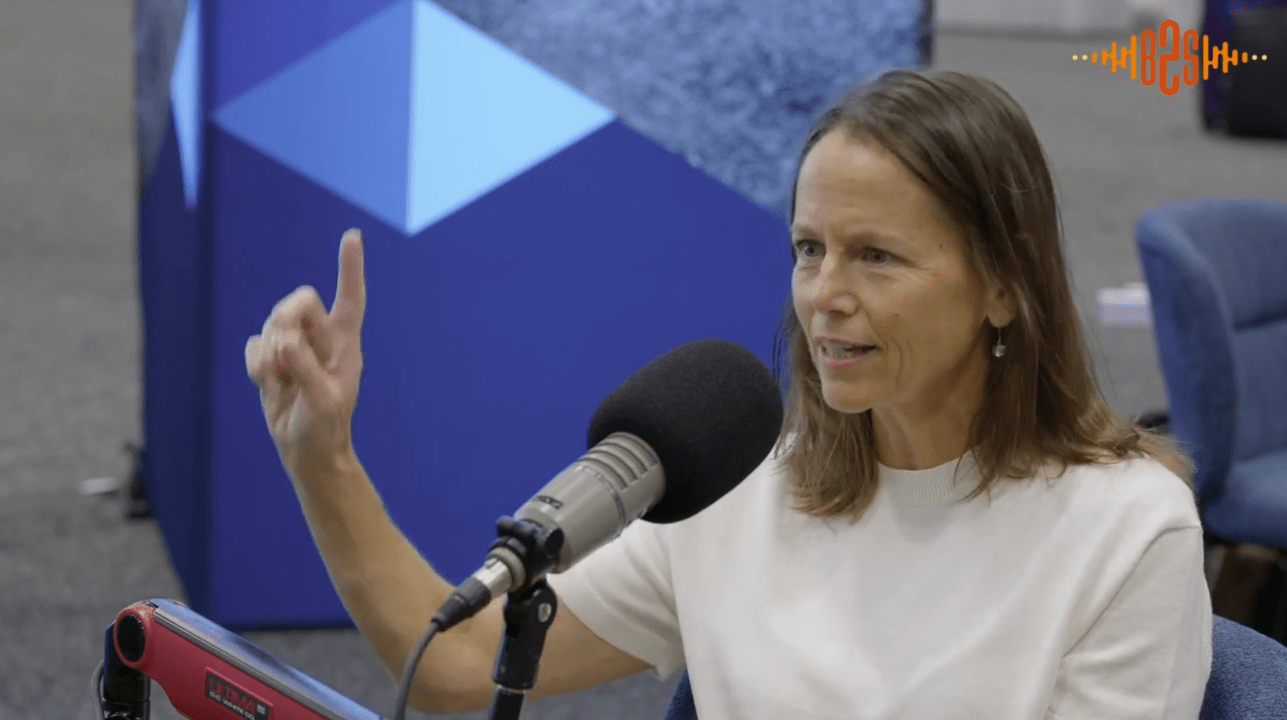

Teresa Grashoff – Executive Vice President, Leasing & Business Development, The Ferber Company
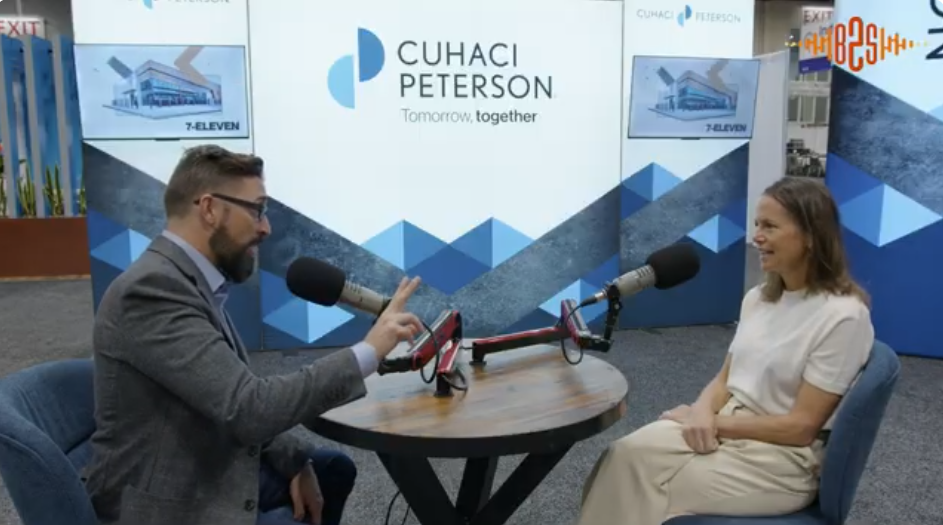
Listen to the specific part
Episode Transcript:
TERESA GRASHOF
Not only is there not a town, there's a school and a church. Not only is there not a town, there's not running water, there's not power. And I think that's why I get so emotional. I was like, just think about everyday life. It's just incredible.
GREG SIMPSON
On this episode of the Built2Suit podcast, Nathan Griffith sits down with Teresa Grashof, executive vice president of Ferber Company to talk retail development, mentoring, and the next generation, power of relationships in our industry. Teresa also shares her passion for education and her community work that she does in Haiti, proving how leadership extends well beyond business. Take it away, Nathan.
NATHAN GRIFFIS
There's a device that will shock you to wake you up.
TERESA GRASHOF
Yes. No thank you.
NATHAN GRIFFIS
Not interested.
TERESA GRASHOF
No thank you.
NATHAN GRIFFIS
Life is complicated enough. I don't need a shot collar. My wife might say
TERESA GRASHOF
different. I like my nice quiet melody that's waking me up. It's bringing me in softly.
NATHAN GRIFFIS
It brings you in softly?
TERESA GRASHOF
Yes.
NATHAN GRIFFIS
Okay. So is that the app, that first thing you hit in the morning is your waking up or just your natural clock wakes you up?
TERESA GRASHOF
Natural clock actually does usually beat the backup phone, straight up alarm with a nice, sweet opening.
NATHAN GRIFFIS
So what time does Teresa's natural clock wake up?
TERESA GRASHOF
So probably in the 5:45 range. Nothing crazy.
NATHAN GRIFFIS
You're not one of those insane 3:45, four o'clock in the morning people? No.
TERESA GRASHOF
I wouldn't mind. Honestly, I would like to start earlier just because morning is definitely my natural time. And I would like to get more done then. And I like the darkness for the quiet time if I get to capture it.
NATHAN GRIFFIS
Yeah.
TERESA GRASHOF
The quiet darkness. But the reality of life usually means that I'm going to bed later and sleep is also very important. We're just balancing how much can we do? And so the quality time in the evening with the dinner and the family and leave the kitchen clean and all that good stuff. All the
NATHAN GRIFFIS
Things.
TERESA GRASHOF
Yes, exactly.
NATHAN GRIFFIS
All the things.
TERESA GRASHOF
Exactly.
NATHAN GRIFFIS
So I know your daughter graduated from UF this spring.
TERESA GRASHOF
Oh, yes.
NATHAN GRIFFIS
Yes. Okay. So I know about that one.
TERESA GRASHOF
Yes.
NATHAN GRIFFIS
Two kids?
TERESA GRASHOF
Three kids.
NATHAN GRIFFIS
Three kids. Yes. Okay. Where are the other ones at? Are you at Empty Nest is really the question I'm getting to?
TERESA GRASHOF
Nope. Not an empty nest. So the two daughters, two UF grads under the belt, which is awesome. Oldest one has an amazing job with Johnson & Johnson.
NATHAN GRIFFIS
Wow. Move to Cincinnati?
TERESA GRASHOF
No, no, no. Okay. Nope. She gets to live in West Palm. Okay. She's part of the teams of J&J. There's some clinical technical people who are working in the hospitals. So she's part of that when you're getting down to the final product and implementing the product in the OR. And so she works on cardiac ablation surgeries.
NATHAN GRIFFIS
I don't know what that means, but it sounds really important.
TERESA GRASHOF
People who have got an irregular heartbeat are happy for this technology, which is amazing. And yeah, you and I just got to breeze by each other while I was ... I loved that.
NATHAN GRIFFIS
That was a pretty cool moment. I'm not going to lie. That was a pretty cool moment randomly walking down the street on graduation day and there's Teresa and her daughter. And you're walking the other way and I'm going, "I think you're going to be late." But that's just my ADD.
TERESA GRASHOF
Walking with my daughter to go to her graduation party, we see you. We don't say a word to each other. We just embrace. Then I say, "Congratulations. You say thank you." The whole thing was like three seconds. Then we both start going our opposite directions again and my daughter was like, "Who was that?"
NATHAN GRIFFIS
There was some random guy hugging my mom on the street.
TERESA GRASHOF
My good friend who just finished his master's degree.
NATHAN GRIFFIS
Yeah. Random guy on the street of Gainesville just hugged my mom and I don't know if I'm supposed to tell dad.
TERESA GRASHOF
That was
NATHAN GRIFFIS
Awesome. No, it was really, really cool. But I think that's kind of how our industry interacts. There was an individual I met two days ago and since that time we've bumped into each other seven times and we counted, like she counted, it was a big deal and she's like, "After seven times, we should be best friends." And I said, "I think we are." Absolutely. But I think you have these random connections with people and I think every time you have them, they get deeper and deeper connections and ties. And I think that's one of the huge benefits that we have for the show. So when you're mentoring some younger staff at Ferber, how do you guys leverage this show to introduce them to the industry?
TERESA GRASHOF
Oh, good grief. 100%, right? The attendance here, the depth of relationships, which is what this is all about, the number of years that we've had these relationships and then everybody doing the same thing just continues generationally as you go down the line. So we're all coming together to all do our work together to figure out how we get to get that win-win of design and development and then opening that next bank, coffee shop, burrito store.
NATHAN GRIFFIS
Community amenity.
TERESA GRASHOF
Yes. Yes, exactly. Yes. So we sit, we have them sit. It's that process of developing relationship, come and sit in the meeting, you get to meet them. You're going to hear the words that we all need to have in order to be able to get these actions done. But of course, meet them eye to eye. Yeah, we're going to talk about the deal, but we're going to talk about life, which by the way, I do need to go ahead and mention that third child who is since we
NATHAN GRIFFIS
Get- Oh yeah, we should probably cover that because if you leave them out, you're a horrible, you're a horrible mom.
TERESA GRASHOF
Exactly. Senior in high school, down to the account, 60 days left, get the applications done and out the door.
NATHAN GRIFFIS
Oh, so you really are getting close to that season. We're getting ready to drop your last kid off.
TERESA GRASHOF
We are.
NATHAN GRIFFIS
Okay. You're mentally getting ready for that?
TERESA GRASHOF
Right. 100%.
NATHAN GRIFFIS
Yeah.
TERESA GRASHOF
I love for them to go and fly.
NATHAN GRIFFIS
Yes.
TERESA GRASHOF
Love for them to go and fly. Yes.
NATHAN GRIFFIS
But that doesn't mean you don't want to hold on just a little bit.
TERESA GRASHOF
No, I love for them to go and fly. I love to see them continue to grow and to learn and then to see what the next step is with them. Yeah.
NATHAN GRIFFIS
No, that's awesome.
TERESA GRASHOF
So anyway, back to the mentoring and bringing ... We're doing the same thing with our kids. It's like the natural thing. So that young person is in our life and teaching them the ropes and teaching them the relationships. And yes, depth matters and learning who these people are is important to me anyway.
NATHAN GRIFFIS
Yeah. Yeah. No, that's awesome. So I don't know if you brought the Kleenex, but I warned you we were going to talk about it.
TERESA GRASHOF
Did.
NATHAN GRIFFIS
Did? Okay, good. So get them
TERESA GRASHOF
Ready.
NATHAN GRIFFIS
Yeah. So I just sat down with Alex Evans and a wonderful human being, has a nonprofit, serves the homeless community here in Orlando, has run it for several years. And I think this is just another ... I'm going to give you this platform because I know that you are super, super passionate for the people of Haiti and you've had some opportunities. Well, I say opportunities. I think things just, you get put places and it's like, what am I going to do with this place that I've been put?
TERESA GRASHOF
Right.
NATHAN GRIFFIS
So tell the audience here, I've been put here and why you think you're there and how they can help you be there better.
TERESA GRASHOF
Oh, thank you. Okay. Yes. And you know why this always touches me, I'd be like, what? Just a quick little, there we go. So a small community in Haiti that is about, it's about a three hour car ride from Port-au-Prince. It wouldn't take you as long if they had better roads, but about three hours. And it's a rural community. Bondeau, Haiti, does not show up on the maps of Haiti.
NATHAN GRIFFIS
Bondeau, Haiti.
TERESA GRASHOF
Bondeau, Haiti. And in Bondeau, which is a community that lives on the side and then up a mountain, geographically, I don't know how many miles they cover, but when they come together in community, there's about 4,000. And we have a school and the school does show up on the map. If you Googled Bond Samaritan school, it will come up and there's a little more than 400 kids who attend that school. Two years ago, we had more like 350 and we've now gone over approaching 400 because we've got kids who have been displaced from Port-au-Prince because of all the gang activity in Port-au-Prince. And they can't just grab an airplane flight and come over here. So their family's relocated them. Often maybe they have their mom. They probably don't have their dad because their dad is still trying to figure out a way to make a living.
TERESA GRASHOF
So there's a community who is based in Bondeau. And the challenge of life, we naturally ... Speaking of me, when I started going to board meetings, naturally am envisioning a place, a town, just because of where we grew up and what we're used to. And that's not the case. Not only is there not a town, there's a school and a church. Not only is there not a town, there's not running water, there's not power. And I think that's why I get so emotional. I was like, just think about everyday life.
NATHAN GRIFFIS
Yeah.
TERESA GRASHOF
It's just incredible.
NATHAN GRIFFIS
Yeah.
TERESA GRASHOF
Sorry.
NATHAN GRIFFIS
No, no, no, no. So we're talking about the difference between first world and third world problems.
TERESA GRASHOF
Right.
NATHAN GRIFFIS
We have a first world lens and we think that we see the world ... We anticipate seeing the world through that lens and it's not until that lens is removed and you're like, "This is third world. Their problems are vastly, vast. These are survival conversations." We're not at wants, we're at needs. So what are some of the things that your organization, that you're the chair ... Is it president of the board? I'm the VP of the board. VP of the board. So what are some of the things that your group is doing to meet some specific needs for that group?
TERESA GRASHOF
The school, first and foremost, is what the communities-
NATHAN GRIFFIS
Education is key. I spent some time in Guatemala and everyone that I talk to is their goal is to educate, educate, educate. That is the only way out of impoverished situations. Yes, you can meet a need short term with food, and that's not irrelevant. That's obviously a big deal, but the only way that you break generational curses of poverty is if you educate through it.
TERESA GRASHOF
And the community knows that. And first and foremost, this is a community that we've been working with. I've been involved with them since 2017, but the South Florida Haiti Project, which is the organization that I'm the vice president of the board of, has been the core of it, which wasn't called that in the very beginning, but this is an over 20 year relationship with a community. And from the very beginning, education was identified and that's why the school is there. It started off as elementary school and then they just kept continuing to push the funding. So funding towards, we support the salaries for the teachers. And at this point, it's pre-K, little three-year-old, little ... All the way through in Haiti, they go to the grade 13 as compared to our 12th grade, amazing testing rates. There's actually, the Department of Education is still working in Haiti with everything else. It's astounding.
NATHAN GRIFFIS
Wow.
TERESA GRASHOF
They have to test out and we have 95, don't quote me, but I do believe 95% success rate for our students as they're testing through. The next desire, vocational school, we have staged in Miami, sorry, in Fort Lauderdale right now, hoping it's shipping this week, a container of sewing machine and sewing class equipment because they've kicked off their sewing vocational school. They have got plans that they want to do, plumbing, electrical, and masonry. So starting with sewing.
NATHAN GRIFFIS
Wow.
TERESA GRASHOF
So the help is, and helping to continue to buttress just the base foundation of the elementary school and secondary school. The dream is to get to being able to provide some financial support for the vocational school. We do provide school lunch to 400, five times a week, over four ... I think we're 450 kids now, five times a week. We do that several different ways. We can still buy food in country, and we do. We come together on food packing events in South Florida, so far once a year, which is a great event, and then we get that shipped down to them. We've got healthcare that we provide, infrastructure that needs to be taken care of, and then the big hope of sustainability. They have a great desire for taking care of themselves, building businesses.
NATHAN GRIFFIS
Yes.
TERESA GRASHOF
And part of the way that they see that is actually their specialty in education and being able to provide the vocational school where they do charge some tuition, but they also see themselves as a healthcare location and to be able to provide the service, but also that's also a business.
NATHAN GRIFFIS
Yeah. No, I think that's great. You're building a path through education, then being able to provide for themselves. Obviously, Bible talks about teach Amanda fish, right? So my recommendation, talk to Teresa. There's a wonderful need there. She's got all the connections. You don't have to do all the work that she's done. She'll be humble and she won't tell you all of the work behind the scenes and all of those things, but it's a great organization to support. So Teresa, I appreciate your heart in that. And I appreciate the fact that, yes, we're in this cool industry and it's been a great way of life for us, but it enables us to do things like that in our spare time. And so I appreciate that very much and being able to share that aspect a lot.
TERESA GRASHOF
I appreciate you letting me do that. Yes.
NATHAN GRIFFIS
Thank you
TERESA GRASHOF
So much.
NATHAN GRIFFIS
But thank you for sitting down. Well, thank you for being my friend. I don't have a lot of them. Thank you for being my friend, but also thank you for representing the industry well and how not only the day-to-day stuff of Ferber and the development and all those things, but being a good human being. And that's what I've really appreciated about all these conversations is wonderful human beings in our industry. We have great humanity, so thank you.
TERESA GRASHOF
I'm grateful to you.
Meet your hosts:
Nathan Griffis
Host