Listen to the specific part
Episode Transcript:
Chris Schotsman: I referenced Paul Akers again. You look him up, he wrote this book, Two Second Lean, and it's all about just making little daily continuous improvements. Our team, we're doing a big rollout on some self-contained cases. Our team just launched a whole more of a flow production line. They tested that out and then because we needed more capacity, they replicated that line, made some improvements. I walked the floor, gave some ideas of what I've seen in some of the Japanese manufacturing plants and they've implemented some of those things. But I told them too, I said, "What you need to do is grab the pictures of what it was before and grab pictures and make some notes and then share that with other people in the company. Tell the story to the other people in the company because I think that kind of thing will get other people excited. Hey, I can do that. I can fix what bugs me too in my daily life, in my daily work."
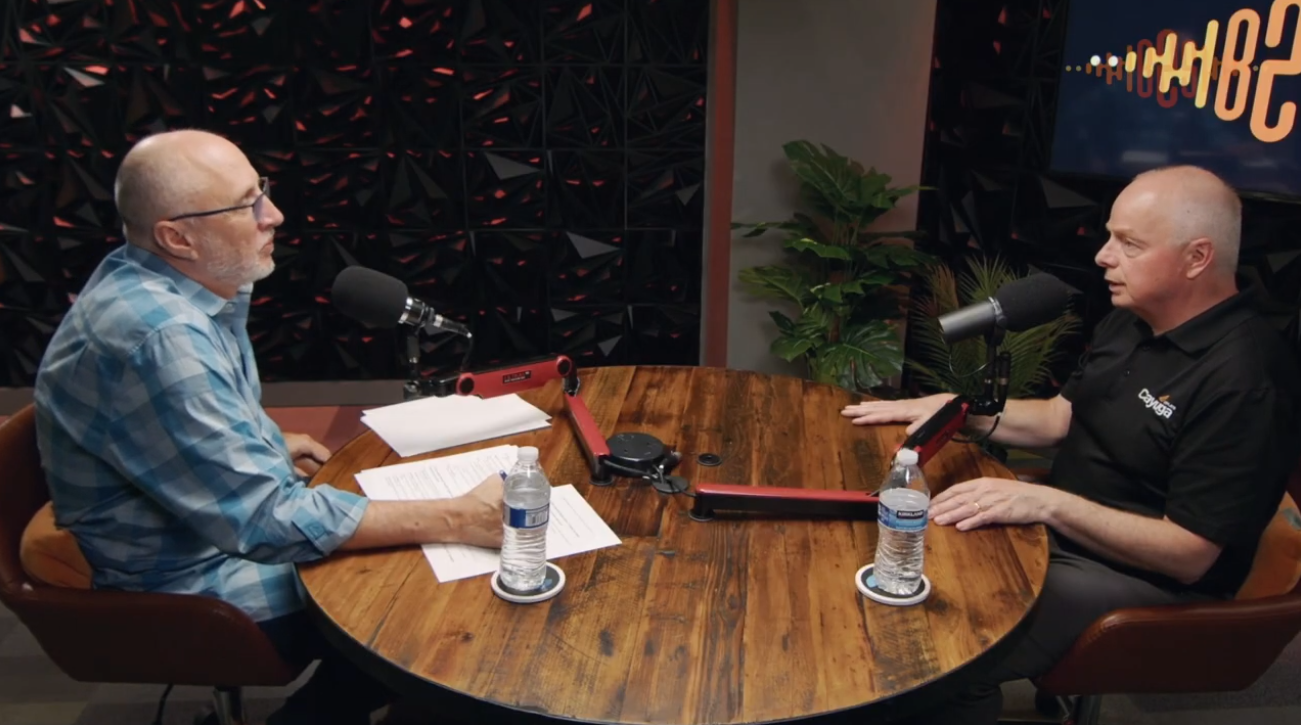
Greg Simpson: Hey gang, Greg here on the Built to Suit podcast. It is built to build what is next, a pod you really need to see. And today we have a really cool gentleman with us from north of the border in Canada. I think he is our first North of the Border participant in the Built to Suit podcast. Probably an infamous thing, not a super thing. It is Chris Schotzman, who is the vice president of sales and marketing and chief cook and bottle washer and designer and everything else I can figure out. Welcome in to the pod.
Chris Schotsman: Thank you. And don't hold the Canadian thing against me, please.
Greg Simpson: I don't think so. I don't think we'll do that. Cayuga Displays is a really interesting company. We've had folks on the pod from larger display companies or certainly larger equipment manufacturers, but you seem to do a broader range of stuff than say a husband or a hill. You do refrigerated work, but you also do non-refrigerated stuff. What got you into all that?
Chris Schotsman: Well, back in 1980, so the original founder of the company, he was a home builder in the little town of Kiuga, Ontario, Canada, basically in between Buffalo and Toronto. He was approached by the local IGA to make some tables for the produce department. And they said, "Sure, I can do that." So they did that. And then the wholesale group that was servicing all the IGAs in Ontario picked that up and they said, "This is really good. This is a great program." So they started rolling it out. And that's kind of how it evolved from there. And then the temperature controlled side of the business, Hussman used to have a factory near us in Branford, Ontario when we would subassemble cases for them and build ends, that kind of a thing. That was eventually shut down, but that was a big part of our business. So we always kind of dabbled in it and customers said, "I need this olive cart or I need this salad bar. Can you guys do any of this kind of thing?" So eventually we got into that. We purchased a little company. Yeah. We didn't get much out of it, but it got us in the business.
Greg Simpson: How did you get to displace? I mean, tell me a little bit about what you went through to get all the way here.
Chris Schotsman: Well, going way back, my dad was an entrepreneur. He was an electrical contractor and he started his own other little businesses. So I've always been in manufacturing and always been kind of surrounded by this entrepreneurial culture and manufacturing. So I went to business school and I got into the automotive business working for automotive parts supply manufacturers, supplying parts to the OEMs. And my role was kind of the sales support, eventually sales manager. I worked for a Japanese company calling on the OEMs at that time. So spent quite a number of years doing that, about 15 years. But yeah, I got tired of having to negotiate how much money I was going to give back to them every year and that kind of thing. So I approached my brother who was part of Keyuga Displays, Keuga Cabinets at that time. He was invited to be part of this company by the original founder. He was supplying components to the company. And then the original founder's name was John Marina and said to my brother Rick, he said, "Hey, I want you to come work for me, take over the company. My daughter's not interested." I talked to Rick and he said, "Yeah, I could use some help." And yeah, I joined mid 2000s and 21 years later, here we are.
Greg Simpson: Dad didn't see problems, he saw opportunities.
Chris Schotsman: That's right. Yeah. So
Greg Simpson: Talk about how that shapes the way you lead.
Chris Schotsman: Well, I learned my exposure to working in a Japanese culture, the benefits of long-term thinking and lean thinking. There's a gentleman called Paul Akers, who's a big lean guy. He says, "Fix what bugs you." So that's kind of my mantra. And we try to build that kind of feeling within our culture. Continuous improvement. Always looking at ways to make things better. Maybe not progress, not perfection, that kind of a thing.
Greg Simpson: When did you realize it's not carpentry? It's actually merchandising.
Chris Schotsman: Yeah. The food retail business is very much driven by merchandising and trying to create a great environment for the shopper and helping people buy food and make good choices, that kind of a thing.
Greg Simpson: Make good choices. I like that.
Chris Schotsman: So
Greg Simpson: You're 21 years in now, right?
Chris Schotsman: Yeah.
Greg Simpson: What's the hardest thing you do on a daily basis? Because I feel like you're doing a lot more than selling.
Chris Schotsman: Well, I mean, as a leader of the company, you always got to think about the future. I'm always looking at, okay, we're at this level now. We want to be at this level. What's the next thing? And what do we need to do to get there? Not just in terms of landing the next big account, but how is that going to execute? How are we going to make that happen? Part of my role now is evolving to be more of a mentor to the next generation of leadership team. And it's like, have you thought about this? Have you looked at this? And walking the shop floor and just seeing things. We've been hiring a bunch of young people lately and you hear this negative story all the time that young people don't know how to work these days and all that kind of stuff and these generalizations. And that's not been my experience, not been our experience. I'm really pleased with some of these new young people. And that gives me hope for the future of the company because we've got people that we can look to. Who's going to be the next leaders? We're always looking internally. We need to fill this spot. Who can we move up and move forward? Yeah.
Greg Simpson: So that's a really good segue. If you could give like one year Chris, first year Chris, one rule for career compounding, what you did, where you started and how you get to where you got. What do you think that rule might be?
Chris Schotsman: I think you got to look for people that you can look up to and you can say, "Hey, latch on to people who can be mentors." Maybe sometimes it's a good idea to say, "Hey, would you be my mentor?" I don't necessarily do that, but there are people that I met early in my career who said things to me, helped me out. And that stuck with me for a long, long time. So listen, be humble and just be curious. Ask questions. "Hey, why did you do things that way? What's your strategy? What's your thinking there? "That kind of a thing.
Greg Simpson: We're going to put your other hat on. I'm going to take your mentor hat off. We're
Chris Schotsman: Going to put
Greg Simpson: Your merchandising
Chris Schotsman: Hat
Greg Simpson: On. And so I'm going to ask you just a random question. When a
Chris Schotsman: Store
Greg Simpson: Feels fresh or feels great, what's actually doing the work, you think?
Chris Schotsman: It's things like how's the lighting? Is it clean? Fundamental things. Are the displays well signed? Can you understand how much this thing is and what's it's telling me? Things like signage are so important. Are the displays, do they look good? Do they compliment the product? Do they make the product stand out? Or do they detract from the product? Is there a match between the quality of the product on display and how it's being displayed? I find often there's a disconnect that way. Somebody selling a beef tenderloin for $75 a pound and they're selling it out of a 40 year old case that's got tape on it. That doesn't work. If you go to buy a Mercedes, you don't expect to go to a junkyard to buy something like that.
Greg Simpson: You expect the environment to match up with your expectations
Chris Schotsman: Of the
Greg Simpson: Product. That makes sense. So if we look at product mix, you mentioned lighting, layout or all kinds of things. In your experience, where does merchandising really start? I mean, at what level does that thing start, you think?
Chris Schotsman: What are you trying to achieve? What's the plan? And the merchant has to think about their customer. Who's your ideal? It's no different than us trying to identify our ideal customer. The merchant has to identify their ideal customer. What's that profile? And what are they going to be interested in? What's going to make them stop and pay attention to what I'm trying to sell? I'm not a merchandiser, but I would say the planning piece is critical. And there's a whole lot of things that are involved in that. I do think when you put a door on something, it does inhibit sales, but people get used to it. Europe is, everything's behind doors.
Greg Simpson: New
Chris Schotsman: York,
Greg Simpson: Everything's behind a lock.
Chris Schotsman: And a door. Yeah. I think in North America, we just fight it. There's a big case to be made for putting doors on cases from an energy benefit, a store comfort benefit for the shopper too.
Greg Simpson: So you sit right in between the merchant and the store designer, I guess.
Chris Schotsman: Yeah. And then the procurement people get involved at some point.
Greg Simpson: So what do those worlds do that tend to produce this misunderstanding? What's the most misunderstood practice between the two of them?
Chris Schotsman: Planning and merchandising. I think they work fairly well together. It's when the procurement people get involved. I won't get any details, but we just went through a whole experience where we've been working with the planning and the merchandising team to execute a big program, big, big program rolling out across Canada. And then boom, it goes to the commercial department. And they basically wasted four weeks trying to get us to reduce our price. And the other team was saying, "Well, no, we've already spec'd this in. We're not changing anything. This is what we're going to do." And at the end of the day, we got our price. I wasn't budging on it. If you don't want it, you go somewhere else. But the one side was saying, "We need this. You got to meet this timeline." And the other side said, "We want you to squeeze your price and all this kind of stuff." So I see that kind of boneheaded in some of the largest companies doing silly things like that. Like just work with me as a supplier and let's have a open, frank conversation. What are you trying to achieve? What can we do? And then we'll try to come to a point that makes sense for both of us.
Greg Simpson: What needs to surface for a piece design to be successful? For something like that thing to be successful? Beyond that, what synergy needs to happen?
Chris Schotsman: I love it when you are able to have a conversation with the merchandising team and with the planning people. I find a lot of times the procurement people tend to be the gatekeeper. So they get the requests from the merchandising people, from the planning people, "You need to find me this." But you don't, me as a manufacturer of the equipment for the merchandising people, you don't get access to them. So you're always getting filtered because they're scared. They're scared the merchandisers are going to get so excited about this and they're not going to worry about cost and all that kind of thing. But at the end of the day, you're going to be a lot further ahead if you work together as a team collaboratively. We're not stupid. We understand cost is important, but we also understand you need to make sales and you need to get ROI. So what is the best solution for you to get sales?
Greg Simpson: That's a real interesting point because I think the merchants don't get the credit they deserve for putting theirself on the line to say, "If we do this, we can earn this in a spot." And I think the other one I see some is when product gets merchandised, it's just too much product. And how do you as a manufacturer kind of coach, "Hey, that's just too much product. That's just going to be cluttered in a mess."
Chris Schotsman: As
Greg Simpson: Opposed to, "Hey, we'll build what you want."
Chris Schotsman: I often tell people you'll sell more at the end of the day if you put one variety of product on that bakery table than if you put six varieties. You will sell more. It's research. We're supposed to be the experts, so we've got to push back sometime.
Greg Simpson: Do you ever get a peek behind the curtain after you deliver something and see how something's performing from a financial point of view? You ever get to see that?
Chris Schotsman: Yeah. I love to get that data. It's hard to get customers to give that up to you. But like I said earlier, that's a big part. I like to go in, get pictures of our stuff in the stores, ask them how it's working. I want to talk to the people who are actually using the equipment. How is it working for you? Because it's good to hear how good it is, but it's also good to hear, well, this is great, but this could be better because then I want to bring that back to the team. And it's the whole idea of continuous improvement. Well, my nephew is the engineering manager, so I'll walk in and say, "Hey, Tom, this is what I'm hearing from people in the field. Can we do something about that?"
Greg Simpson: So we've talked a little bit about the big boys. I mean, what do you think the regionals are doing different than the nationals in the way they apply your product?
Chris Schotsman: I mean, it's about service to knowing their customer, their local community, giving back to the community. I think they have an easier time of connecting to the community in a sense. So I see that a lot. And a lot of them are more full service. So some of the bigger retailers are more focused on lower price points, mass, that kind of a thing. Whereas more of the regional players are more of, what we experience anyway, more of a full service kind of a retailer. So full deli departments and bakery and prepared foods and meat and that kind of thing.
Greg Simpson: Yeah. You mentioned Maverick, so you got convenience and
Chris Schotsman: You
Greg Simpson: Got urban markets. How's the rules changed for those guys, do you think?
Chris Schotsman: Well, I mean, we generally see stores are getting smaller. If you're a smaller player, you're not going to have access to the great sites because these big companies, they have big full real estate teams and they're out there.
Greg Simpson: Yeah, they'll beat you to them.
Chris Schotsman: Yeah. Yeah. So that's a real challenge.
Greg Simpson: When we originally spoke a few weeks ago, you talked a little bit about the platform you build on and you built that platform from the automotive industry and the thought that things are sort of prototypical with maybe just different things bolted on. At what point does that kind of customization stop being customization and being the risk to the way the product gets built and deployed?
Chris Schotsman: I learned years ago in the automotive industry, well, these parts that I sell, they would go on a Toyota and they would also go on a Lexus common parts, but it's not the visual sexy piece that the customer interacts with. There's a lot of that kind of thing that goes on. So a lot of the way we've designed our product is the same way. So we have standard platforms and then we allow. We have a lot of different customized options that you could add to it. So it looks custom to the customer, but it's efficient for us to produce. And we're constantly trying to build more standardization on those platforms, especially now with our HMR lineup. So salad bars, soup bars, hot food bars. We're building that product line out to standardize as much of that as we can, but give people options so we can change the look, the finish. We have different sneeze guard options.
Greg Simpson: Anything hard to keep standard?
Chris Schotsman: Yeah. Produce departments. It seems like every retailer wants to put their stamp on their produce department and make it different. The
Greg Simpson: Best in the world.
Chris Schotsman: Yes. Well, I get that because produce is a huge reason why people shop at store.
Greg Simpson: Perishable perimeter, right?
Chris Schotsman: Yeah.
Greg Simpson: And that's where all the money gets made. That's what we're told anyway. The stuff in the middle is pure commodity stuff on the perimeter is your kind of special sauce. If we stay on the lean front for just a minute. So variability hurts in lean. I know that because we produce a wide variety of product here, but there's engineering time, procurement, fabrication, assembly, installation. Where do you think it hurts the most?
Chris Schotsman: Well, there's a lot of risk involved. Is it going to work right? Is it going to fit right? Are we going to have defects that we don't catch because it's non-standard? Is it going to take more time? Are we going to make money at it? Those are all the factors that come into it. I would say for us, a bottleneck process is our engineering and design department. And that's where it hurts us because it plugs that whole area up. So we can't flow. Talking about lead, it starts right at the beginning. It starts in the sales process all the way through to shipping and follow up. And that clogs us up if we have too many of these variables that we have to redesign and make new drawings, get approvals. It just slows everything down.
Greg Simpson: So does certifications really drive what can't be done? DOE, UL, NSA, NSF, those kind of things? Do those get in the way sometimes?
Chris Schotsman: So on the dry, like the non-refrigerated side, people, well, you can just make that out of wood and change that and that's easy. Yeah. Okay. Sort of, but there are issues with that. But on the temperature control side, that's kind of like sometimes a nice thing to fall back on. People get it. It's like, oh yeah, that's right. Oh yeah, you got to go through the whole R&D testing, engineering and certification piece, which is time and thousands and thousands of dollars and all that kind of stuff. So that's why we can't do that, what you're asking us to do, but we can give you this. And why reinvent the wheel? It works.
Greg Simpson: What manufacturing feedback do you consistently see going back to your design team?
Chris Schotsman: Making sure we work with the builders of materials right for all the parts. Making sure somebody cut corners and didn't draw this properly or this hole is missing or this size is wrong. A lot of times it's wiring complaints. Why did they design it this way? But sometimes that involves outsourced components that we have to add into our cases. And there's a lot of complexity in wiring all this stuff up.
Greg Simpson: So we got lean success in a factory, but how much of that lean success shows up really when you get out to the install?
Chris Schotsman: That's a big part of it is designing upfront for the install. So talking to contractors, talking to people who actually receive the equipment, install the equipment, set it up, we service it. All that feedback, what we try to do is build that into the design of the product.
Greg Simpson: Apparently a grocer bought a case and it got dropped off the back of a truck.
Chris Schotsman: Tell
Greg Simpson: Us a little about that story.
Chris Schotsman: Oh yeah, yeah, yeah. So yeah, we shipped a case down. It was Louisiana or something like that. And they didn't know how to unload the truck apparently. And they dropped it and fell right on its front or upside down, upside down in the parking lot. So they writed it up and they plugged it in and it still ran. They just needed some of the external panels, the wood panels on the outside. And we just replaced a few of those parts and the plexi parts. I love to tell those stories too, especially to the design team and to the manufacturing team.
Greg Simpson: That's really interesting. Any other pain points you think a good case design kind of eliminates before the product ever ships?
Chris Schotsman: Is it easy to work with? Can you clean it? Is it easy to clean? Is it easy to service? Does it highlight the product? That's what it's all about. I mean, people eat with their eyes. So when they walk up to that case, is it making the product really stand out and look great? That's the important thing. I'll use our food bars, for example, salad bars, hot food bars, soup bars. When we started researching the market and getting approached to build these things, we would build a whole like a Noah's arc and drop wells into it. But eventually we learned and we found out - Two giraffes were
Greg Simpson: Just too, too
Chris Schotsman: Many. Yes. And so we learned what were the pain points in the industry? It was always like an engineering project. I heard stories of it just took six weeks for somebody to get a quote because they had to engineer this whole thing. So that just didn't make sense to us. So designing it in modules that are easy to assemble and you can. It's like Lego. We always use that term Lego. So a lot of what we try to do is using that kind of Lego mentality, just be able to mix and match because no store is the same, right? No food bar is the same. It's always different depending on the situation. So designing those cases that are module, they can just bolt together. We build them on casters, you wheel them off the truck, put them in place, bolt it together, drop the sandy legs, push the kicks on. Works really well. Things like the electrical raceways, have we thought about that? Have we thought of how they're going to be able to plumb these cases or hook up the refrigeration? Is that accessible? Where are the controls located? How is the wiring done? Is it easy to access? What kind of components do you put in your self-contained cases? Is it some proprietary cheap offshore thing that you can't get, but you saved a few bucks? Or is it a name brand component that a service company can easily replace it and get it up and running?
Greg Simpson: So salad bar, probably not something you'd characterize as productized, probably more of a custom request. What do you need to be true kind of internally with your business before you commit to doing something highly customized?
Chris Schotsman: Often it's like 90 / 10. So 90% we can build it off of our standard platform. And then 10%, it might be this custom filler piece or a POS station or a soup unit or something like that that has to be custom. So we can handle that. But we're always trying to get better at that, better at that. So we are starting to standardize those components as well so that we can pull all these elements out of our catalog and make everybody's life easier.
Greg Simpson: Kugo wants to be lean, wants to be programmatic, wants to deliver a product that's a really cool product. So how does Lean kind of envelop the overall organization? I know I've wanted Lean to take over here a little bit more. Does it resonate with people in the company?
Chris Schotsman: I referenced Paul Akers again. You look him up. He wrote this book, Two Second Lean, and it's all about just making little daily continuous improvements. You've probably heard of Atomic Habits. It's that same kind of concept. Make 1% improvement every day. So our team, we're doing a big rollout on some self-contained cases. Our team just launched a whole more of a flow production line. They tested that out and then because we needed more capacity, they replicated that line, made some improvements. So I walked the floor, gave some ideas of what I've seen in some of the Japanese manufacturing plants and they've implemented some of those things. But I told them too, I said, "What you need to do is grab the pictures of what it was before and grab pictures and make some notes and then share that with other people in the company. Tell the story to the other people in the company because I think that kind of thing will get other people excited. Hey, I can do that. I can fix what bugs me too in my daily life, in my daily work."
Greg Simpson: How do you decide yes, we can versus no, we can't?
Chris Schotsman: The reason our company is in business is to help people succeed. If this thing you're asking me to do is not going to help you succeed, not going to help me succeed, that doesn't make sense. But I try to give options. So this is what I can do that's going to help you succeed or I can point you in another direction. If I can't do it, I can call on my resources. I have people, maybe Kohachi and Peterson, those people that can help you. I can hook you up. I try to do that all the time. What I want to do is have them contact me and ask me a question.
Greg Simpson: So you build a lot of equipment that's designed to be really functional equipment, but when I look at the other players in the industry who build more volume equipment, you're Building more jewel box equipment or more things that serve a very nuanced purpose. How do you bring the creativity to that? Because you are a totally different manufacturer than a bigger national manufacturer of just standard refrigeration gear specifically.
Chris Schotsman: Yeah. It's good to think about your competition, but sometimes it puts us into a box. And so see what others are doing, but try to just think differently and see things differently and really understand what's the purpose of this? What are we trying to achieve? What's the end goal of what this merchandiser is going to do? Basically, it's to elevate sales and make it a better shopping experience.
Greg Simpson: So do you guys have a discernible method of design, this method of turning this idea into something you can manufacture?
Chris Schotsman: Well, that's going to be getting into this collaborative design process. So having more voices at the table, evaluating the opportunity, does it make sense? And a sales team, we're always getting feedback. We're always talking to customers. We're going into stores talking to people. So bringing that to the table and saying, "Hey, look, I keep hearing about this. Maybe it's something we should look at as an opportunity."
Greg Simpson: In the grocery business specifically, certainly the manufacturing business, it seems size matters, but you're not anywhere near as big as some of the biggest case manufacturers. So how do you position yourself thoughtfully to understand what you want to achieve and the sizes you want to work in and the markets you want to play in? Because I know logistically there's stuff about shipping stuff too far, but I mean, is there a size that's too big for you? There's got to be a sweet spot. That's what I'm looking for.
Chris Schotsman: Yeah, exactly. You're right. And so what we focus on, especially in the US, is more the regional players. We don't go after the huge national chains in the US. We do some more of that in Canada, but it's a different scale. And when we do get invited to bid on big projects, we'll pick what makes sense to us and where we can add value. So I'll use the example, some years ago we were invited to quote on some cases for huge international coffee chain. You would know it. And we went all through the process and we explained. We were very transparent about what our capacity was and what we could do and what we couldn't do. We went to their head office, did the presentation.
Greg Simpson: Drank some coffee.
Chris Schotsman: Yes. And they make you go through, answer - I
Greg Simpson: Don't know who you're talking about, but I know who you're talking
Chris Schotsman: About. Yeah. They make you answer 50,000 questions. And it was a good process. Was it
Greg Simpson: Good coffee is what I
Chris Schotsman: Wanted. Yeah, it was fine. And they said to us, we didn't win it, but they said we were very well respected in that we were very honest and transparent about what we could do, what our capacity was.
Greg Simpson: From a size point of view, what's a juicy red customer?
Chris Schotsman: A regional chain of like a few hundred stores. We do, can I say a customer name here?
Greg Simpson: Of course.
Chris Schotsman: Yeah. So ShopRites in the New Jersey, the Northeast. They're an interesting group, but we're building that business steadily. They really like what we do.
Greg Simpson: Obviously you do cases, refrigerated cases, and that's kind of where I want to pivot here. Since you're buying a lot of components that might be self-contained or otherwise, does the Aim Act really challenge you like it does other vendors who are connected to bigger systems?
Chris Schotsman: Yeah. So we do a bunch of mainly grab and go self-contained cases. So we've had to switch over to R290 like everybody else. And the challenge with that is we used to make some larger self-contained cases that meeted a need. And with the charge limits, we can't sell those into the US anymore. So that's an issue. I had a conversation with a very large customer a while ago and they wanted sushi cases, but they need them self-contained because they need to add them into existing stores. And yeah, we can't do that anymore. And we used to do that quite a bit.
Greg Simpson: So we had a gentleman from Lowe Rental
Chris Schotsman: On
Greg Simpson: Here several weeks back, and he talked a lot about the difference in grocery in Europe than here in the States. Can you describe kind of what's going on different in Canada maybe than what's going on here?
Chris Schotsman: Well, Canada has not, we don't have the same regulations yet. We kind of follow what the US does, but I'm not an expert in all that stuff. So I just know we have more flexibility in Canada at this point in time on the refrigerant options for us and self-contained. But it's probably going to shift into Canada as well. I will say CO2 systems have been used in Canada for quite a long time. And we've been building cases for those programs for probably 15 years. So that's not something that's new to us.
Greg Simpson: Kind of want to widen the lens up more to a design lens or a merch lens because I got to believe there's stuff going on. Certainly if we go urban to suburban, you're going to see bodega to suburban grocery store. But do you see stuff in Canada that's perhaps a bit more, it's a bit different? And maybe rephrase who's doing it right in Canada?
Chris Schotsman: You mean the retailer?
Greg Simpson: Yeah.
Chris Schotsman: Who's doing
Greg Simpson: It right and what are they doing?
Chris Schotsman: Well, I like to talk about some of my own customers. So I mean, the one retailer we've done a lot of work with is a brand that's owned by Soby's Empire Group. They're a parent company. It's called Farm Boy. They have about 40 locations across Ontario now. So what Soby's has done and what they are is a fresh focused retailer. So it's fresh and then a couple service departments and then prepared foods. Oh, so
Greg Simpson: There's almost no center store.
Chris Schotsman: Correct. And whatever center store there is, it's mostly private label owned brands and unique stuff. So it's kind of like, they like to call Trader Joe's the farm boy of the South, but they're kind of like a bit of a Trader Joe's kind of a vibe.
Greg Simpson: Size similar?
Chris Schotsman: Yes. Bigger. Typically 20, 25,000 square feet. So a lot of what happens is, as we talked about earlier, a customer goes to a big box discount banner to buy the staples or they order it online now. And then they'll go to people like Farm Boy because I want my fresh produce. I want some good meat. I want a nice salad, prepared foods, that kind of thing. Deli. So that's kind of where they're. I think that's a good model. So they can fit these into smaller store formats. They're putting them into like downtown Toronto has quite a number of them now in condo towers.
Greg Simpson: You've got that kind of cornered and then you got the more big suburban player in Canada. Who's doing it right?
Chris Schotsman: Well, the biggest one is Loblaws. And they are on a big program to renovate a lot of their stores. So they're powerhouse. They're very a great pioneer in the private label product with their President's Choice brand. So they've figured that out and they bought Shoppers Drug Mart, the largest drug store chain in Canada. So they've been putting food into those. So they're making them into little food/beauty, health and beauty stores. So I think they've got a good model. The second largest one is Soby's and they've steadily, they've got a discount banner. Everybody's putting money in their discount banners.
Greg Simpson: Yeah. It seems like as inflation rose during and post-pandemic,
Chris Schotsman: That became
Greg Simpson: A real opportunity. Certainly in this country, Walmart really took advantage of that. So
Chris Schotsman: You
Greg Simpson: Supply a fair amount of product down here in the States, right?
Chris Schotsman: Yeah. Yeah.
Greg Simpson: So it's got to be somebody down here in the fresh side that you're supplying your product to that's probably doing a good thing. So talk to me about somebody down here.
Chris Schotsman: I think the ShopRites do very well. We work with Price Shopper Market 32. We do a lot of all their specialty
Greg Simpson: Cases. Honestly, that's how I met you.
Chris Schotsman: I met you.
Greg Simpson: Some of that, that's almost 15 years ago
Chris Schotsman: Now
Greg Simpson: That we were doing the rollout of 32. And so
Chris Schotsman: There was
Greg Simpson: Some very exciting cases in there for sure.
Chris Schotsman: Yeah. We're starting to do more and more in their prepared foods area. So hot salad bars, soup bars, hot food cases, that kind of thing.
Greg Simpson: So is your convenience kind of play kind of rest in that prepared food zone?
Chris Schotsman: What we're seeing in our area, some of the C-store chains are actually putting, they're rebranding some of them and putting them in urban markets, so downtown locations. They're like many grocery stores. Seeing some of that. A lot of the things that we do for C-stores will be those grab and go plug in cases. And then modular islands, the hot and cold, dry modular islands is a lot of what we do.
Greg Simpson: Do you find that you're getting into stuff that's more kind of food driven or airports or grab and go or other things? Is that an emerging market for you?
Chris Schotsman: No. Well, we used to do more of that, cafes and bakeries and delis, a little bit more food service, but it's difficult to play in that market just because it's just a different way to go to business. There's dealers involved. There's different layers of people involved. And airports are challenging environments. And we've had it where cases got specked in and people didn't know what they were doing when they installed it. And then of course it comes back to us. It kind of becomes a finger pointing game, but yeah.
Greg Simpson: How do you design for this grab and go environment versus say a browse and pick environment?
Chris Schotsman: It's about how the product is used. For grab and go, it's about what's convenient. It's placement of the cases. And I see that evolving at convenience stores, more of that grab and go meal, snacks, but more of a health focus too. People don't want to just get the hot dog that's been rolling on that roller for three hours. They want salads. So it's interesting times.
Greg Simpson: Do you see anything that you see buying habits changing? Do you see doing some different things now than you might have been five or 10 years ago?
Chris Schotsman: I just see this whole trend towards fresh. People are investing in produce. I don't think enough retailers are doing enough with it. I'm of the opinion, let's put labor where it makes sense. So we have self-checkout. It's okay, but let's have somebody actually working in the produce department selling you something, like telling you what kind of health problem do you have? Well, do you know that this can help you with that? You make everybody work so hard. And people are more, I think they want that information. So what can we do to do more of that?
Greg Simpson: You kind of snuck AI in about 30 minutes ago when we were talking through how you're doing something in your office. Is there a role for technology in store?
Chris Schotsman: Oh yeah, I definitely think so. You could ask ChatGPT, put together a nutrition program. I've got these issues, that kind of thing. But then stores should also be kind of working with people with that. I don't know. I just find store, there's too much labor picking stuff off the shelf, putting it in boxes to ship it out. And there's not enough of that kind of human to human service kind of interaction.
Greg Simpson: That's an interesting observation you just made. We've deployed the labor in store to try to meet a different service channel, a different need
Chris Schotsman: Stand. And my thing is I don't think they're making money at that. We're always hearing about we got to take labor out, got to take labor out. So more self-service, more grab and go. Okay. But then why can I not, if I'm in the store, I made the effort to come here, but some employee is standing in front of the shelf that I need to get my stuff from. Please
Greg Simpson: Do not get me started about the friction of large scale carts in that environment. It's a very unpleasant shop because it's like, you're right. They always seem to be where you need to be. And convenience is a need state even when you're in store. There's an expression we use around here, small is the new big.
Chris Schotsman: Do
Greg Simpson: You feel like formats are getting smaller? Is that a thing? We work with one of the biggest grocery stores in the world. So it's not a thing there, but
Chris Schotsman: Somehow
Greg Simpson: I think the environmentally that the way you feel, the way you can merchandise, that small might be the new big, especially if you're having stuff home delivered. So
Chris Schotsman: What
Greg Simpson: Do you think about that statement?
Chris Schotsman: Definitely. I see that. And that's where I think when I see the blurring of the lines between a supermarket and a C store or a drug store, everybody's getting into food. So people, they'll go to the Walmart to do their big family shop kind of a thing, right? But there's a lot of people who don't want to do that.That's a big commitment for me. I just want to get in and get out. I don't want to be around a ton of people, but I want healthy and fresh options. Who's going to give that to me?
Greg Simpson: You would think that it's some kind of a oxymoron that you go to a small store to not be around people, but that store's frighteningly busy. You find yourself being there right when they open so you can actually kind of get through it. So I think it matters. I think the environment matters. What other things do you think we're going to see in groceries say five, 10 years down the road?
Chris Schotsman: Well, we're part of this evolution, like more food service at retail. That continues to trend and we're part of that. People are more open to going to the supermarket to get their meal as food prices go up and I can get decent food there. I can sit down at some of them. Sometimes you can get a glass of wine with it. Some of those markets, and I don't have to wait, I don't have to pay a tip and the prices are pretty good. It's fresh. So I think the food options, you're just going to see continue Moroccan chicken and a lot of different international type foods, which you didn't see even 20 years ago, 10 years ago. We are evolving what we're offering in terms of hot cases, hot holding cases. And we're just building out all those solutions. Again, making it modular, flexible, adaptable to different environments. So you can scale it up, scale it down depending on the size of the location.
Greg Simpson: Electrification in vehicles was going to take over the world. Do you think as we move toward an electrified future that we get away from gas and go, that convenience runs a risk of becoming irrelevant?
Chris Schotsman: I think they're trying to figure out a way to get people into the store and get them to linger longer. QuickTrip in Wisconsin, they're a great convenience chain. And you go in there and they have bakeries, they are sampling food in a convenience store. And you got a whole range of options in terms of foods that you can pick up, a snack or a meal. So I think that kind of thing where you create an experience that kind of entices people to. And you give them a lot of different options. Healthy options, not just, again, the hot dog and the pizza slice kind of thing.
Greg Simpson: Yeah. If I'd ask you this question two years ago, it'd probably been a bit more relevant. We're going to talk about online grocery just a little bit. You did jump in there and say you don't have any clue how it's paying for itself. And that's true. I kind of agree with that. And I know it's not your thing, but what do you think has to happen for that to be profitable?
Chris Schotsman: At some point, you got to get the labor out, right? There's a lot of labor picking and choosing this food. Somebody's getting paid to do the shop for you. Can you charge enough for that? I don't know. I mean, what's the line at which people will say, "No, that's too much. I'm not going to do that." You're starting to see that with some of the food delivery, DoorDash and all that kind of thing.
Greg Simpson: Well, you're starting to see the rebellion of the person who's having to pay the fees,
Chris Schotsman: Which
Greg Simpson: Is the vendor for sure.
Chris Schotsman: Yeah. Maybe it's robots picking the food.
Greg Simpson: We've been through that and certainly we know the folks at AutoStore extremely well. We work with them for a number of years trying to understand, especially cold chain, keeping the cold cold and working it through low temp and medium temp and robots and things like that. But it has a pretty high floor of economics to actually get one of those in. And I don't think it works at the store level yet, even close. I know some big grocers who have some installed base, HEB's one of them, that has put in that particular product. But I think you're still in a pretty wide distribution model
Chris Schotsman: Because
Greg Simpson: Of the economics of the robotics. Were you ever worried that the online shop was going to make what you do more irrelevant?
Chris Schotsman: We focus on the fresh perimeter departments, the prepared foods. It's just not something that a lot of people are comfortable with ordering on their computer.
Greg Simpson: So where are you taking Kayuga next? We don't have to go onto the design floor and steal some double secret new design, but where do you want to see Kayuga go?
Chris Schotsman: Yeah. I have a revenue target in mind and kind of where I want to get that to. Us get to this point where we've got a lot of what we talked about earlier, the processes, get that nailed down, lean the soft side of the business, so to speak, and get some more of this product standardization under our belts. And then I know we can take it to the next level, offering what the market wants, but also keeping our prices competitive and having efficient designs. What
Greg Simpson: Do you think's going to happen with grocery in the future?
Chris Schotsman: People are stressed about price, so value is going to continue to be a very important thing. The customer shopping habits is very fractured, right? And I think that's going to continue. So they're going to buy this online and got to buy this from the best value. But I think still people are going to want to buy, pick some things themselves, the important stuff. And they'll pay extra for that.
Greg Simpson: Do you want to see all the important stuff in a Kuga case?
Chris Schotsman: Yeah.
Greg Simpson: Well, you said there's a difference between important and not important. So I was just intrigued. Ruling the world means you want to see everything that's the good stuff
Chris Schotsman: In your stuff. I want to be like an industry leader. I want us to be an industry leader in the sandbox we play in. The trend I see in the market is a lot of competitors getting bought up by private equity or larger companies. And then they're rationalizing product lines. So they're getting out of this and they're getting out of that and they're getting out of that. Which for us, it's like, well, it creates opportunity for us. There's less players in that market. You asked about supermarkets. I think what the future is, I think people are hungrying for community. And I think a supermarket could be more of that, a community hub. Music, food, bringing people together, events. Some people like Lowe's play around with that kind of thing. Singles nights. There's a store in Toronto, downtown Toronto that Sobey's put in. And I love to tell this story. So it was kind of this kind of urban legend or you'd hear this buzz. It's where single women went to shop and they would check out what these single men were buying for food. This guy's buying nothing but pork rinds and potato chips now. But that guy's buying salad and healthy food. So it's kind of an interesting story about what a supermarket can do for a community.
Greg Simpson: That's really funny. So that tells me that the real important stuff would come in a Kayuga case at that point because you're probably not going to merchandise pork rinds.
Chris Schotsman: No.
Greg Simpson: Well, Chris, thank you very much for joining us today.
Chris Schotsman: Sure. Yeah, you're very welcome. Right
Greg Simpson: Here on the Built to Souit podcast. And you guys can ingest and enjoy the important stuff of this podcast where podcasts are served or on the Built to Suit website. Focus in on this great conversation and many more in industry. We are the Built to Souit podcast built to build what is next. I'm Greg Simpson and we'll see you next time.
Meet your hosts:
Greg Simpson
Host